You Are Not Required to Pay the Buyer's Agent. Here Is How to Decide.
No, since the 2024 NAR settlement, Illinois sellers are not required to offer compensation to the buyer's agent. Most still do, because a listing that offers nothing reaches fewer represented buyers. It is now a pricing decision rather than a default.
| Your choice | What it does | The trade-off |
|---|---|---|
| Offer buyer-agent compensation up front, outside the MLS | Keeps the widest pool of represented buyers | The cost is set before you see an offer |
| Offer nothing | Keeps that money in your pocket | Risks a smaller buyer pool and a longer time on market |
| Decide offer by offer | Buyers ask for it as a concession | You weigh it against the price each buyer offers |
Since the 2024 NAR settlement, compensation offers cannot be published on the MLS.
Sellers are no longer required to offer compensation to the buyer's agent. That changed with the NAR settlement. But most sellers still offer it, buyer's agent commissions have gone slightly up rather than down, and refusing to offer anything can cost you more than it saves.
Here's the part that should bother you: in a 2026 Clever Real Estate survey, 45% of sellers said they didn't know the rule had changed before they listed — and 35% still offered to cover the buyer's agent anyway.
What actually changed?
Two things, and neither is what most people think.
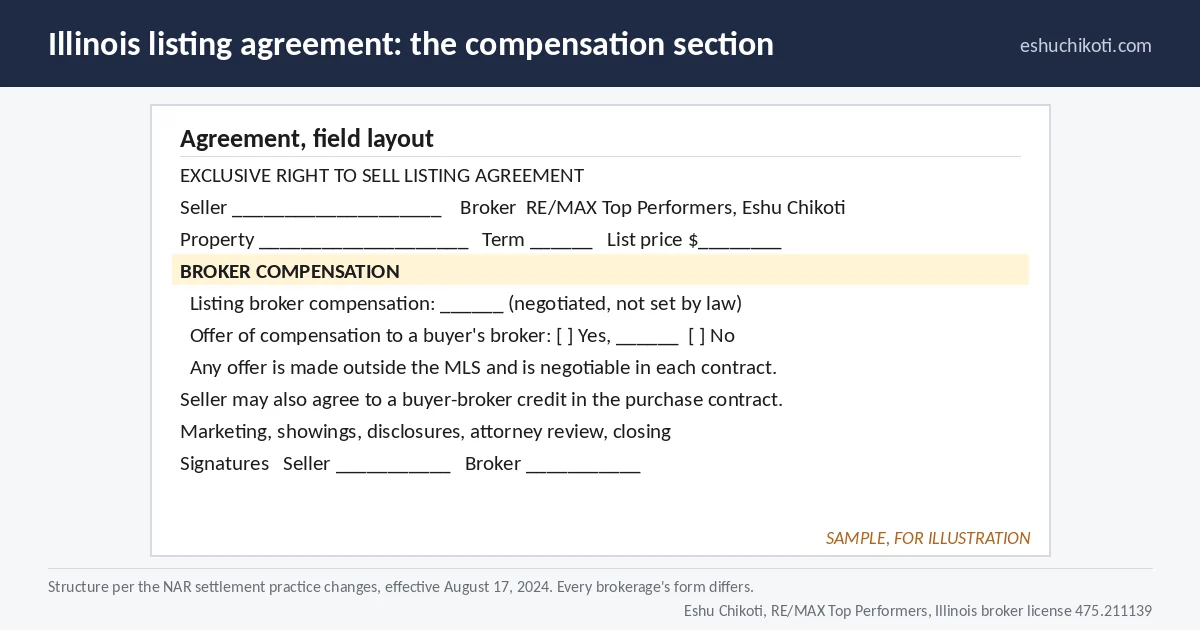
First, offers of compensation came off the MLS. Before the settlement, a listing broker published what they were offering a buyer's agent right there in the MLS, where every agent could see it. That is gone. The offer moved off the public listing and into a direct conversation between the two brokers. It still happens — it is just no longer advertised in one standard place.
Second, buyers now sign a written agreement with their own agent before they tour homes. That agreement states what the agent is paid and who is expected to pay it, in specific dollars or a specific percentage, before the buyer sees a single house. This is the part sellers underestimate. Your buyer walked in the door already owing their agent a number. If you don't cover it, that number doesn't disappear — it either comes out of the buyer's cash or gets pushed back into your deal as a lower offer or a request for a credit.
What did not change: sellers are still allowed to pay the buyer's agent. Nothing prohibits it. The settlement removed a requirement and a disclosure venue. It did not ban the practice, and it did not set a new rate.
That distinction matters, because a lot of the coverage got it wrong — "sellers don't pay buyer's agents anymore" — and some of that wrong version is still ranking on Google. Sellers read it, assume the cost is gone, and price their decision on a headline instead of the math.
What does the data actually show?
The prediction was that commissions would collapse. They didn't.
According to Redfin's Q3 2025 data — the most recent full quarter reported — the average U.S. buyer's agent commission was 2.42%, up from 2.36% a year earlier. It was essentially flat against the prior quarter's 2.43%, leveling off after three consecutive small increases.
- Homes under $500,000: 2.52% average buyer's agent commission, the highest of any price tier and unchanged year over year.
- Homes from $500,000 to $999,999: 2.32%.
- Homes $1 million and up: 2.22%.
Two things stand out. Commissions went up, not down. And the percentage is lower on more expensive homes, which makes sense — 2.5% of $900,000 is far more money than 2.5% of $300,000 for roughly the same amount of work, so the rate compresses as the price climbs.
Why did they rise at all, when the entire point of the settlement was to push them down? Redfin's own read is that a slower market handed buyers more negotiating power, and buyers used some of that leverage to ask sellers to cover their agent rather than pay out of pocket. The rule changed, but the underlying incentive — buyers who are stretched thin and want the fee covered — did not. Rules move faster than the reasons people had for the old behavior.
One thing has not changed at all: commission rates are fully negotiable and are not set by law. There is no standard rate, and anyone who tells you there is one is wrong.
So should you offer it?
This is the actual question, and it's a business decision, not a rule.
The case for offering compensation
The strongest argument is that it keeps your buyer pool intact. Most buyers are financing, and they are already stretched by the down payment and closing costs. If they also have to write a separate check to their agent, some of them cannot buy your house — not will not, cannot — because that money generally cannot be rolled into the loan. Every buyer who can't cover their own agent is a buyer who quietly drops off your showing list.
There is also a quieter dynamic. Buyer's agents have real influence over where their clients spend a Saturday, and an agent working through a stack of showings knows which listings will pay them and which won't. It is uncomfortable to say out loud, and it is how the market actually works. Offering compensation keeps your listing on the tour.
And it is negotiable, not binary. You are not choosing between the full going rate and zero. You can offer 2%, or 1.5%, or a flat dollar amount, or hold it back and offer it as a concession when an offer arrives. The decision is a dial, not a switch.
The case against
The obvious argument is that it is real money. At 2.5% on a $600,000 sale, that is $15,000, and if you are tight on equity, $15,000 can decide whether the sale even works. That is not a number to wave away.
Some buyers also come unrepresented, and if they do, there is no buyer's agent to pay at all — though you should be clear that in that case no one at the table is protecting the buyer's interests, and that can slow a deal down as much as speed it up. And in a genuinely hot market you may not need the incentive: if your house will draw multiple offers in a weekend, your leverage is different, and buyers may cover their own agent to win. The catch is that most sellers believe they are in that market when they are not.
How do you actually decide?
Run it as a math problem, not a principle. Four numbers settle it.
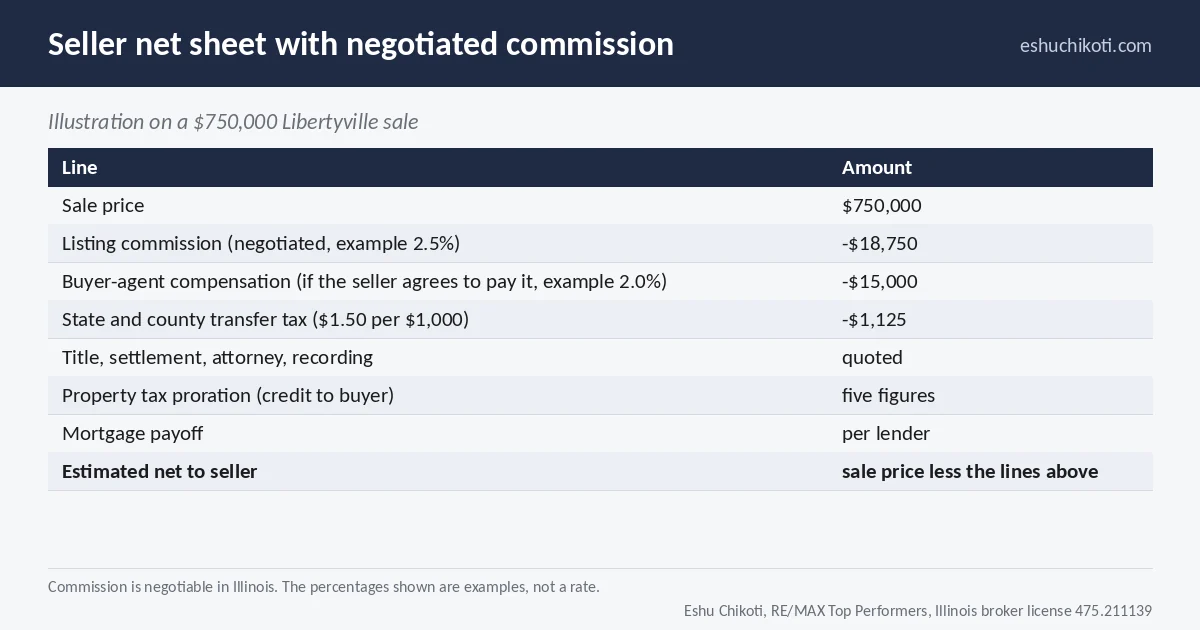
Start with your net proceeds both ways — what you walk away with offering, say, 2.5%, and what you walk away with offering nothing. The gap between those two figures is your real spread, and it is smaller than the headline commission because refusing to offer changes what buyers are willing to pay. Then look at how long your price band is sitting on market. If comparable homes are moving in a week, you have room to offer less or nothing. If they are sitting sixty days, you do not.
Third, weigh that spread against your carrying cost — the mortgage, taxes, insurance, and utilities you pay for every extra month you hold the house. Fourth, consider offering it as a concession instead of advertising it. Rather than posting a number up front, you handle it in negotiation when a specific offer arrives, which keeps your flexibility and lets you trade the credit against price. A concession at closing and an advertised commission cost you similar money; the concession just gives you more control over when, and whether, you spend it.
Here is the shape of it on a $600,000 sale. Offer nothing and you might save $15,000 on paper. But if that pushes your house from a two-week sale to a two-month one, and your carrying cost runs $4,000 a month, you have spent $8,000 to save $15,000 — and that is before you count the lower offers that tend to follow a listing with no compensation. The saving is real. It is just rarely as large as the sticker, and sometimes it is negative.
What about your own agent's commission?
Everything so far is about the buyer's agent. Your own listing agent's fee is a separate negotiation, and it is just as negotiable — the settlement didn't change that, it only made more sellers aware of it. There is no legal rate, no required rate, and nothing 'standard' beyond what your local market has drifted toward. If a listing agent quotes a number as if it's fixed, treat that as the opening of a negotiation, not the end of one.
That said, cheap is not the same as good. A listing agent who prices your house right, markets it properly, and negotiates hard can earn a full fee back several times over. One who cuts their rate by cutting their effort can cost you far more than they save. Judge the fee against the plan behind it — ask what specifically they will do to earn it, and compare that across the agents you interview, not just the percentage. The commission you should worry about is the one attached to a weak plan, at any rate.
What this means if you're selling right now
Ask your listing agent to show you three numbers before you sign anything: your estimated net proceeds at your target price, that same figure with buyer's agent compensation included, and your monthly carrying cost. If they cannot produce those quickly, that is information too.
Then ask what is actually happening in your price band in your Lake County town, not nationally. The 2.42% national average is useful for context and nearly useless for a decision about one house in Gurnee, Libertyville, or Vernon Hills — where inventory, price band, and buyer demand all move differently. If you want those three numbers run for your specific address, that's a conversation I'm happy to have.
The sellers who get this wrong usually aren't the ones who paid a commission. They're the ones who saved $15,000 on paper and then carried the house for four more months to do it.
How to Decide
Model it both ways on your own net sheet. Offering compensation costs a known amount. Offering nothing risks a smaller buyer pool and a longer time on market, and days on market cost money too. The right answer depends on your price band and how quickly you need to move.
Commission is one line among several; the rest are in seller closing costs in Illinois. How I handle this decision with sellers is on my page as a listing agent in Lake County.
Frequently Asked Questions
No. You haven't been required to since the NAR settlement rules took effect. Most sellers still choose to, because covering it keeps financed buyers in the running for the house.
It might, and it might lengthen your time on market. Some buyers need the concession to make their numbers work, and that pressure tends to come back as a lower offer or a request for a credit.
Redfin's Q3 2025 data puts the national average at 2.42%, with 2.52% under $500,000, 2.32% between $500,000 and $999,999, and 2.22% at $1 million and up. Rates are negotiable and there is no standard.
Advertised compensation is a number you commit to up front for the buyer's agent. A concession is a credit you negotiate when a specific offer comes in, and it can go toward the agent, the buyer's closing costs, or the price. Similar money, more control over when you spend it.
Yes. You can leave it out of your listing and handle it as a concession when offers arrive. That preserves flexibility, though buyers' agents won't know up front what's available, so some may steer clients elsewhere first.
The seller pays their own listing agent under the listing agreement. Buyer-agent compensation is now negotiated separately: the seller may offer it, the buyer may pay it directly, or it may be handled as a concession. All three happen in Illinois today.
Call 847-691-4282 and we will run the numbers both ways before you list.
This is general information, not legal or financial advice. Real estate commissions are fully negotiable and are not set by law. Rules and customary practice vary by state and by brokerage. Talk to your listing agent and your real estate attorney about your specific situation.
Get new Lake County listings by email
I'll send you new Lake County homes as they come on the market. Just your email, no account needed.
Just your email. Unsubscribe any time by replying.
I'm Eshu Chikoti, a Lake County, IL agent. If you want the numbers in this article run for your specific home or purchase, let's talk it through — no pressure, no obligation.
Get in touch →