Batavia, IL
Batavia, IL is a Fox River city of about 27,000 people in Kane County, with a small piece in DuPage, known as the Windmill City, next door to Fermilab and with its own city-run electric utility.
Living in Batavia, IL means a riverfront downtown, one main school district, District 101, and a median sale price near $495,000 this summer. The trade-offs are property tax around 2.6% of value, no Metra station inside the city, and a city-wide Walk Score of 29. Here is how it breaks down, pocket by pocket.
Written by Eshu Chikoti · 847-691-4282 ·
How Batavia, IL Got Here: A Short History
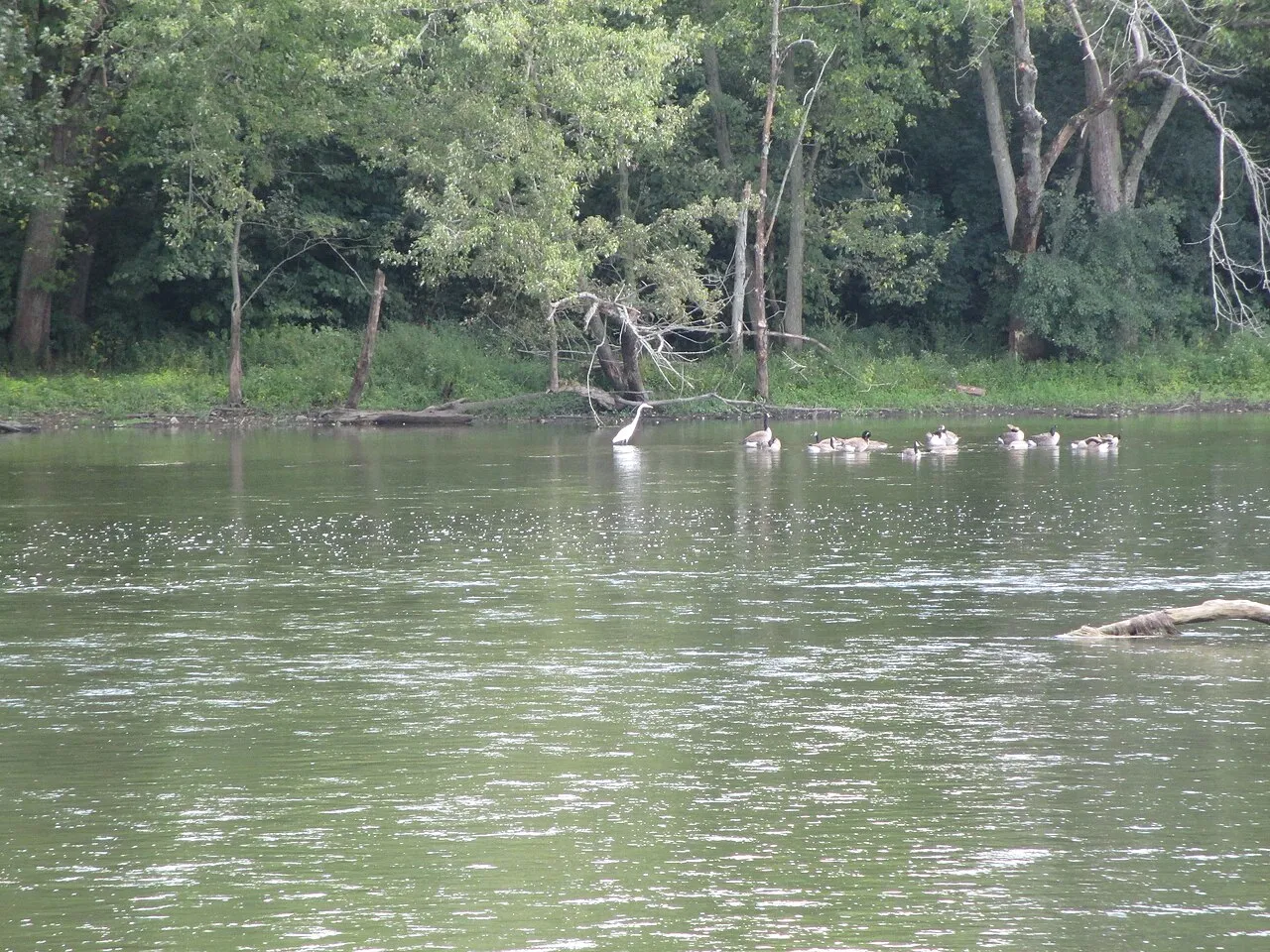
Christopher Payne and his family settled on this stretch of the Fox River in 1833. The first name for the place was Big Woods, after the heavy timber along the river. In 1840 Judge Isaac Wilson, who owned most of the settlement, renamed it Batavia after his former home of Batavia, New York, according to the city's history as summarized on Wikipedia. Batavia was incorporated as a city on July 27, 1872.
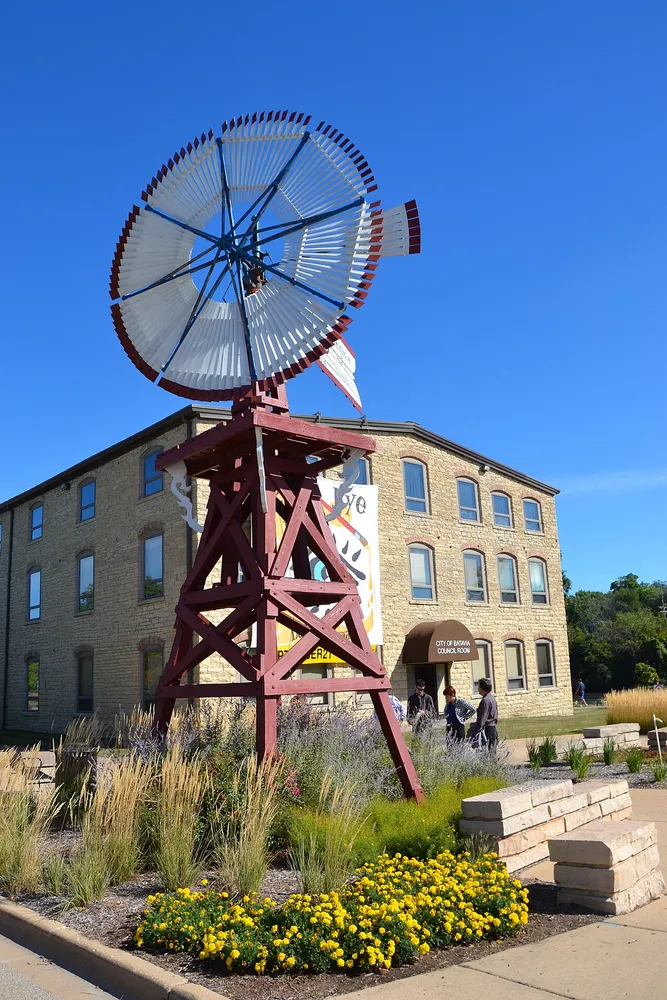
The nickname you will hear everywhere, including in the name of the summer festival, is the Windmill City. In the late 1800s six companies built American-style windmills here, and into the early 1900s most of the windmill-driven water pumps on American farms came from three Batavia manufacturers. The town also built Conestoga wagons for the move west. Many of the limestone factory buildings from that era still stand and now hold government and commercial offices, which is why downtown looks sturdier and older than most western suburbs.
The railroad shaped the town too. The Batavia Depot was built in 1854 as the first of many depots on the Chicago, Burlington and Quincy Railroad. It was moved to its current spot at 155 Houston Street in 1973 to save it, restored to its 1919 appearance, and added to the National Register of Historic Places in 1979. It is now the park district's museum. Passenger service to Batavia itself ended in 1943, which is the reason Batavia commuters drive to a station in Geneva or Aurora today.
Two more chapters come up often. Mary Todd Lincoln was admitted to Bellevue Place, a private sanitarium in Batavia, on May 20, 1875, and released that September. And in 1967 the federal government founded what became Fermi National Accelerator Laboratory on the east edge of town. Fermilab employed about 2,160 people in 2023, and it is also the reason Batavia's east side has a large block of federal land that will never be subdivided.
Batavia at a Glance
Batavia is the southernmost of the Tri-Cities, with Geneva to the north and North Aurora and Aurora to the south. The 2020-2024 Census ACS puts the population at 27,151 across about 10.9 square miles. Of the 10,708 occupied homes, 77.2% are owner-occupied, and 68.5% of all housing units are single-family detached houses.
Most of Batavia is in Kane County, but not all of it. The city crosses into DuPage County on the east side, in Winfield Township, which is where Fermilab sits. Inside Kane County the city also spreads across four townships: Batavia, Aurora, Blackberry and Geneva. For a buyer that matters because the township sets the assessor you deal with, and the combination of township, school district, park district and library district sets the tax code on the parcel. If a house is near an edge of town, check the county and township on the tax bill before you run numbers.
Batavia is also nearly built out. The city is boxed in by Fermilab to the east, Mooseheart and forest preserve land to the south, and Geneva and North Aurora on its other edges. That is why most new homes here come from redeveloping old industrial land or from a few remaining farm parcels on the west side, not from big new subdivisions. A local analysis of Census figures found the population grew by only about 90 people from 2020 to 2025.
The layout is easy to learn. The Fox River runs north to south through the middle of town. Batavia Avenue (Route 31) follows the west bank and River Street (Route 25) follows the east bank. Wilson Street crosses the river downtown and is the main east-west street, with Main Street and Fabyan Parkway to the north and Butterfield Road (Route 56) to the south. Randall Road is the retail corridor on the west side and Kirk Road runs past the industrial parks and Fermilab on the east. Almost every local description of a house uses one of those as the reference point.
Batavia Neighborhoods, Pocket by Pocket
Batavia has no official neighborhoods, but it sorts into four markets. The first is the old town on both banks of the river around downtown, with the oldest houses, the smallest lots and the only real walkability. The second is the east side between the river and Kirk Road. The third is the ring of 1970s to 1990s subdivisions between downtown and Randall Road on the west. The fourth is west of Randall, where the newest subdivisions are and where the city line starts to interleave with unincorporated Kane County.
Redfin's neighborhood pages use nearly the same split. Its Batavia market page names the Historic District, the East Side, the Randall Road Corridor, Big Woods Marmion and Fermilab as Batavia's neighborhoods. Those are data labels, not neighborhood associations, but they match how buyers talk about the city.
The single most important question I ask on a Batavia-address listing is whether it is inside the city limits. A 60510 ZIP code does not settle it. Some addresses on the far west and south sides use Kane County's grid numbering, like the "1S" and "0N" prefixes, and those are often unincorporated. Inside the city you buy electricity from Batavia's municipal utility and the city plows your street. Outside it, the county and your township handle more of that and the tax bill reads differently. Neither is better. Buyers should just know which one they are getting.
Below are the pockets you will see named in listings. Boundaries are informal and agents draw them a little differently, so treat them as a starting point. If you want to know which pocket a specific address falls in, and what that pocket has sold for lately, that is a conversation I am happy to have here.
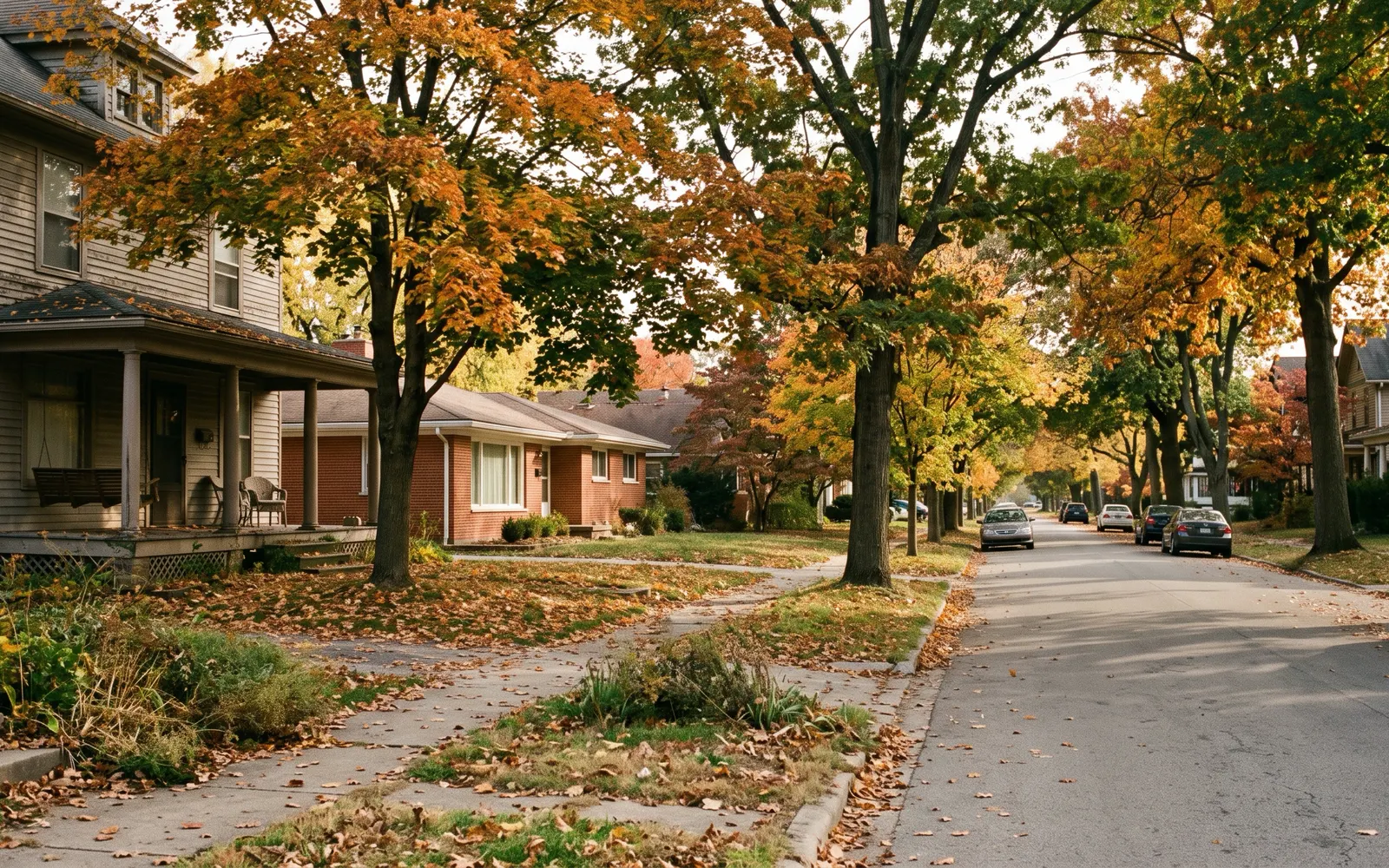
Historic District and the old town. Both banks of the Fox River around Wilson Street and downtown. The oldest houses in the city, many on small lots, and the only part of Batavia where you can walk to the river, the library and restaurants.
East Side. East of the river toward Kirk Road. A mix of older blocks near River Street and later subdivisions farther east, with the industrial parks and Fermilab beyond.
West of downtown. The streets between Batavia Avenue and Randall Road around Wilson and Main streets. Mostly 1960s to 1990s single-family homes, plus the Ashton Ridge redevelopment on McKee Street.
Randall Road Corridor. Homes on both sides of Randall, close to the shopping and the fastest north-south drive in town.
Big Woods Marmion. The southwest side toward Deerpath Road and Marmion Academy, with some of the newest subdivisions in Batavia.
Winding Creek. A Pulte single-family community on the west side, still selling homes in 2025.
Prairie Commons. A Lennar townhome community on the east side near Kirk Road and Butterfield Road, built from about 2019 to 2023.
Unincorporated edges. Grid-numbered addresses on the far west and south sides. Check the city limits, the utilities and the school district on each one.
What Batavia Homes Look Like, by Era
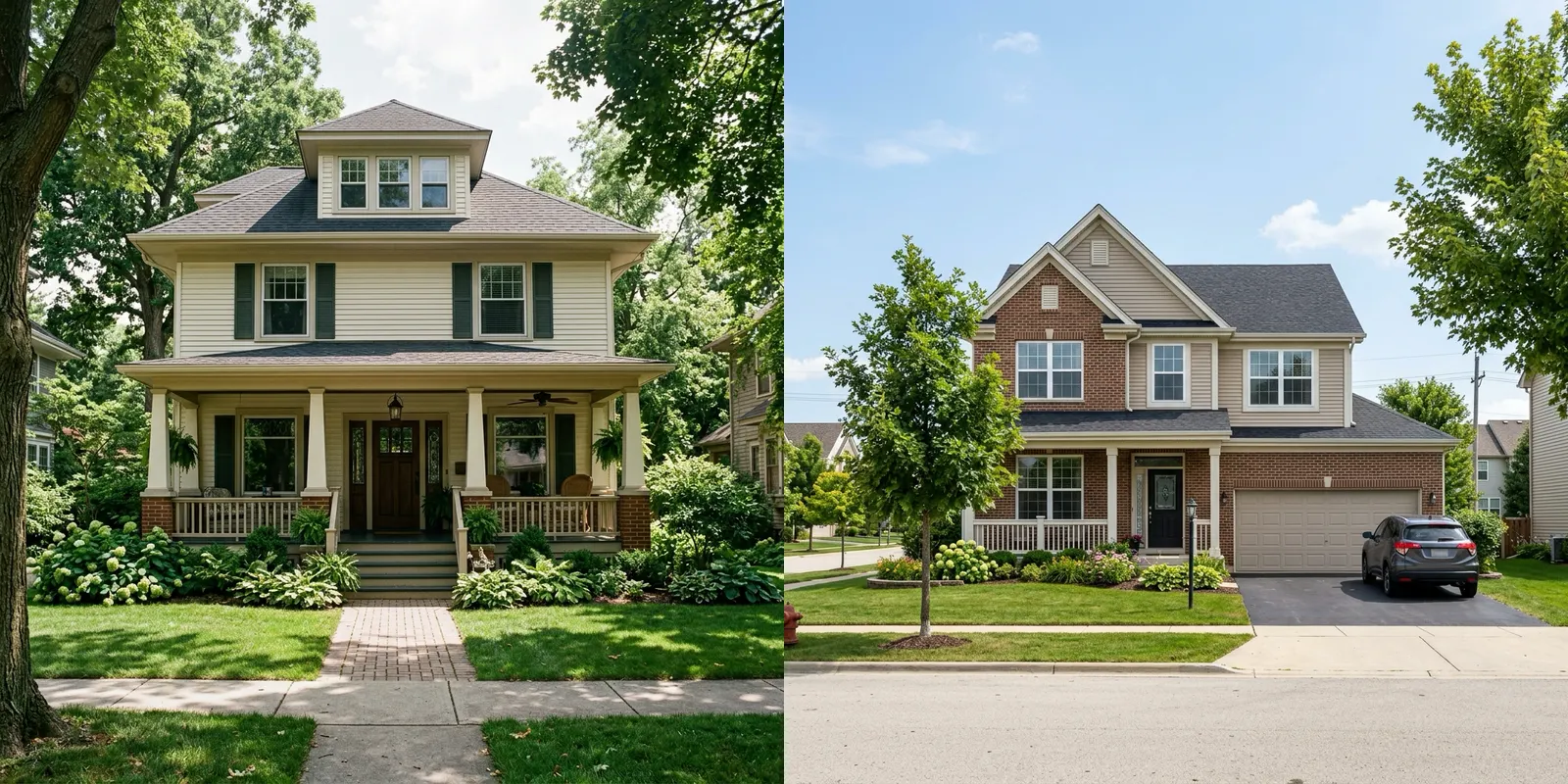
Batavia's housing is older at the core and newer at the edges. The Census ACS puts the median year built at 1985. What stands out is how much of the stock is very old: 16.1% of homes were built before 1940, a bigger share than in most Fox Valley suburbs. The largest single slice is the 1990s at 22.5%, followed by the 2000s at 16.3%, the 1980s at 12.2% and the 1970s at 11.5%. Only about 5% of homes were built in 2010 or later. That matches a drive west from the river: 19th- and early 20th-century houses downtown, ranches and split-levels in the middle, and 1990s and 2000s two-stories near and past Randall.
The mix of building types is wider than the "all single-family" reputation suggests. The ACS counts 10.5% of units as single-family attached, which is mostly townhomes, and 7.3% in buildings with 50 or more units. Townhomes are often the lowest-priced way into a Batavia address and into District 101. The ACS median value is $387,400 and the median gross rent is $1,347, both five-year averages that trail this year's market by a wide margin.
The older houses deserve their own warning. A house built before 1940 can be a great buy, and in Batavia many of them sit on the best streets near the river. They also come with the things a 1910 house was never built to handle. In the old town I expect to talk about knob-and-tube remnants, stone or brick foundations and basements that take water in a wet spring. In the 1970s and 1980s homes it is original windows, aging roofs and furnaces near the end of their life. In the 1990s and 2000s subdivisions it is usually minor. None of that should kill a deal, and all of it belongs in the price. My home inspection checklist is a good place to start.
The Batavia Housing Market in 2026
Batavia homes sell a little above asking, at a steady pace. In the three months ending August 2026, Redfin reported a median sale price of $494,673, up 7.0% from a year earlier. Homes sold in a median of 40 days, compared with 44 a year earlier, at 101.7% of list price. Redfin gives Batavia a Compete Score of 74 out of 100, which it calls very competitive, with an average of four offers. The hot listings went for about 5% over list and went pending in about 31 days.
Here is the part that confuses people. Redfin's median rose 7.0%, but its median price per square foot fell 1.7% to $229. Zillow's home value index for Batavia in August 2026 is $469,730, up 5.4% year over year and up about 10% from $427,978 in August 2024. All three can be right. Redfin's median is the middle of whatever happened to sell in a three-month window, and when the median goes up while the price per square foot goes down, it usually means bigger houses made up more of the sales. Zillow's index estimates the value of every home in the city whether it sold or not. My read is that values are rising at a normal pace, around 5%, and the summer's sales tilted toward larger homes.
Volume was up. Redfin counted 134 sales in August 2026, up from 112 a year earlier. More sales with a rising index usually means buyers are still there and more sellers decided to list, which is a healthier market than the tight inventory of the last few years. A well-priced house in a good pocket still draws multiple offers here, and an overpriced one sits until the price comes down.
The city-level number only goes so far. The gap between a townhome on the east side and a large house west of Randall is several hundred thousand dollars, so the median tells you about Batavia and very little about a specific house. If you are still working out a budget, my guide on how much house you can afford in 2026 runs the math with taxes included, and is it a good time to buy in 2026 covers the rate side.
Batavia Property Taxes and the Real Cost of Owning
Property tax changes the monthly payment in Batavia more than any finish in the house. Ownwell's data, updated April 2026, puts the median effective rate in Batavia at 2.63% and the median annual bill at $8,833, against 2.49% for Kane County as a whole. Its 10th to 90th percentile range in the 60510 ZIP code runs from 2.34% to 2.79%, so parcels really do differ.
Here is what that looks like on a real purchase. At 2.63%, a house bought at this summer's $494,673 median would eventually carry about $13,000 a year in tax, roughly $1,085 a month on top of the mortgage. The current bill on the same house may be lower, because assessments trail the market and catch up after a sale. The expectation I most often have to reset is buyers who budget off the seller's current bill.
Two local changes move the bill in opposite directions this year. The City Council passed a 10-cent increase in the city's property tax rate for 2026 and 2027 to close a budget gap, according to a local recap of the council's year. At the same time, Batavia School District 101 retired its last bonds and became debt-free at the end of 2025, which takes that debt levy off the bill. Because the school district is the largest line on a typical bill, some owners will see their total go down slightly even with the city increase.
The tax code is where the real variation lives. Batavia spans four Kane County townships plus a DuPage piece, and parts of the city sit in Geneva District 304 or West Aurora District 129 rather than District 101. Each combination is its own tax code with its own rate, so two houses a mile apart can carry different bills at the same price. Ask for the last full tax bill on any house you are serious about and read every line.
If you think your assessment is high once you own, Kane County appeals start with your township assessor and then the Board of Review, on a deadline that opens when assessments are published. This is general information, not tax advice. Your actual bill depends on your parcel, your exemptions and the assessor.
Batavia Schools: District 101 and Batavia High School
Most of Batavia is served by Batavia Public School District 101, a unit district that runs every grade from kindergarten through high school. The district has six elementary schools (Alice Gustafson, Grace McWayne, H.C. Storm, Hoover-Wood, J.B. Nelson and Louise White), one middle school, Rotolo Middle School, for grades 6 to 8, and Batavia High School. Having one middle school means every District 101 student in a grade ends up in the same building by sixth grade, which is different from most neighboring districts.
The high school, at 1201 Main Street, had 1,771 students in 2023-24). A 2009 to 2011 renovation added new wings, a fieldhouse and the Batavia Fine Arts Centre, an 890-seat theater that also hosts community performances.
The detail that trips people up is assignment, and in Batavia it goes beyond which elementary school you get. Parts of the city are served by Geneva District 304 and West Aurora District 129 instead of District 101. A Batavia mailing address does not tell you which district a house is in. Check the address with the district directly before you write an offer, and ask me for the boundary if you want it done for a specific house.
For current test scores and school-level detail, the Illinois Report Card is the official source and is worth an hour of your time before you choose between two houses.
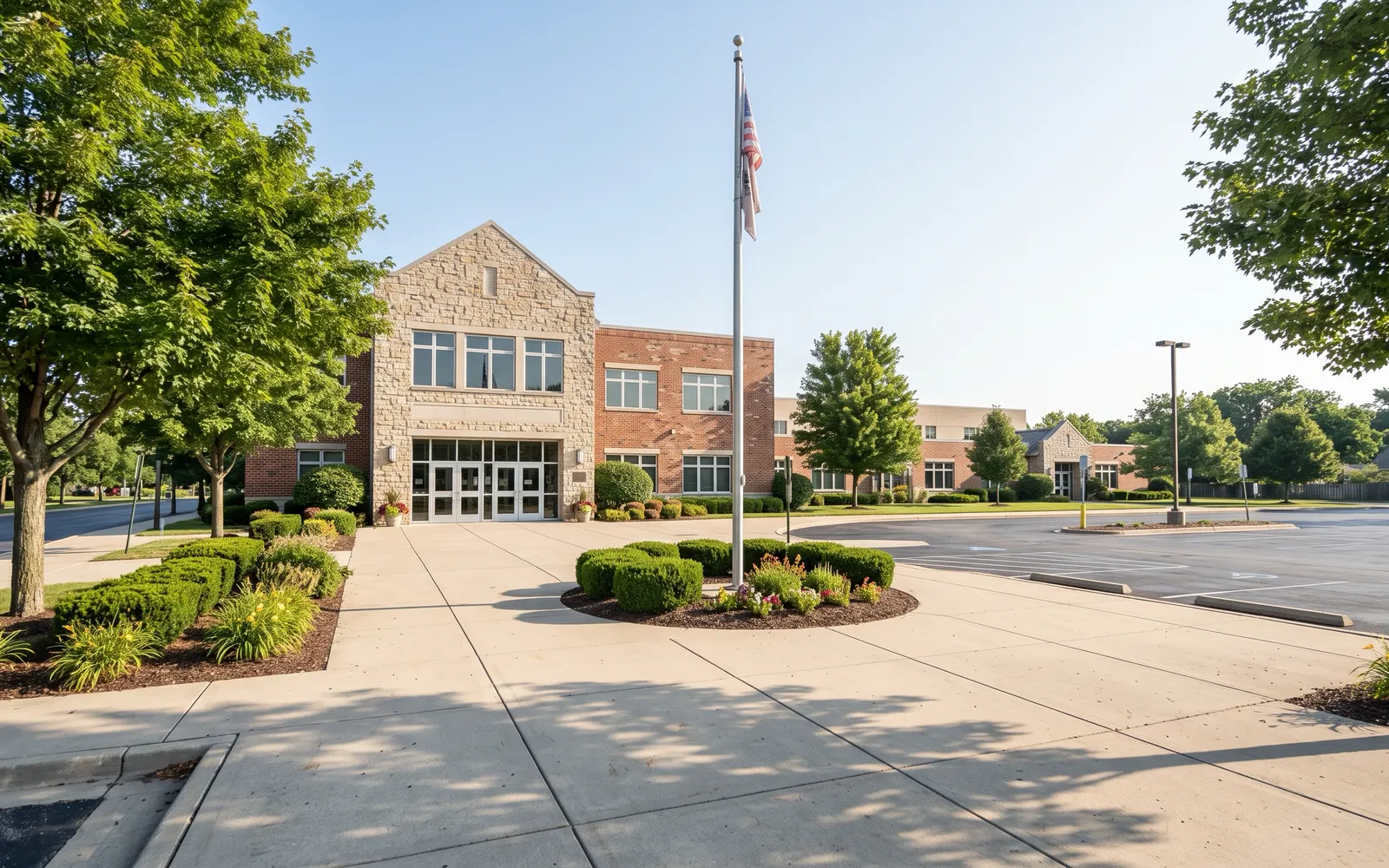
Alice Gustafson School. Elementary, District 101.
Grace McWayne School. Elementary, District 101.
H.C. Storm School. Elementary, District 101.
Hoover-Wood School. Elementary, District 101.
J.B. Nelson School. Elementary, District 101.
Louise White School. Elementary, District 101.
Rotolo Middle School. Grades 6–8, District 101.
Batavia High School. 1201 Main St. Grades 9–12, District 101.
Commuting from Batavia: Metra to Chicago
Batavia has no Metra station of its own. Passenger rail into the city ended in 1943, so Batavia commuters drive a few minutes to a station in a neighboring town. The good news is that there are three solid choices on two different lines, and which one you use depends on which side of Batavia you live on and where you work downtown.
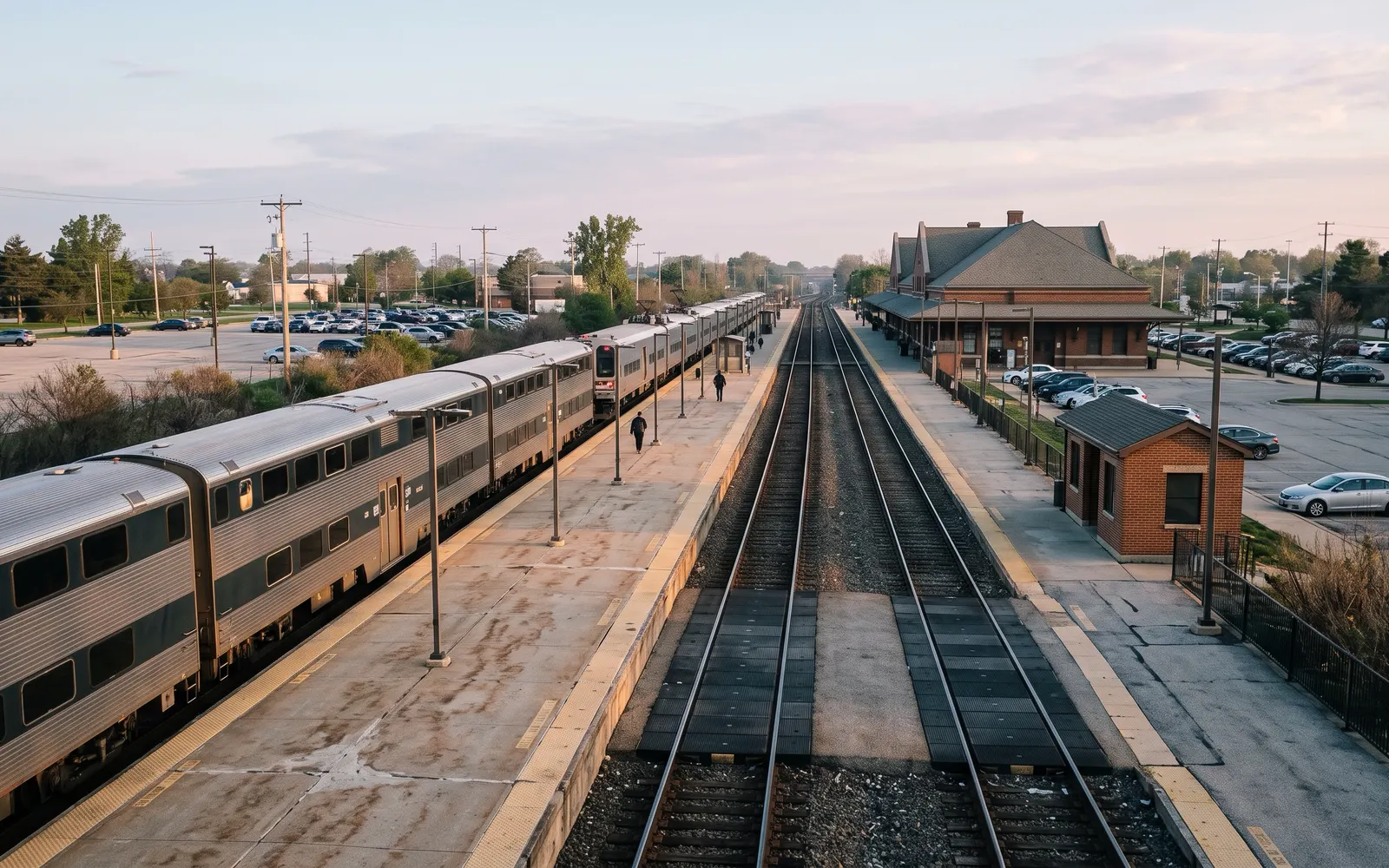
North to Geneva, the Union Pacific West line runs to Ogilvie Transportation Center. According to Metra's published schedule data for fall 2026, 28 trains leave Geneva for Chicago on weekdays. The fastest morning train, the 7:00 a.m., reaches Ogilvie in about 60 minutes, most rush-hour trains take 65 to 74, and all-stop trains take about 76.
South to Aurora, the BNSF line runs to Union Station, and it has the most service. The same schedule data shows 32 weekday trains from Aurora toward Chicago. The rush-hour expresses reach Union Station in 54 to 58 minutes, while midday trains take about 75. A few stops east, the Route 59 station on the same line cuts the ride to as little as 45 minutes on the fastest morning expresses, at the cost of a longer drive from Batavia.
In practice, a lot of west-side and north-side Batavia commuters use Geneva, and east-side and south-side commuters use Aurora or Route 59. If you commute every day, check parking at the station you plan to use as well as the train times, and time the drive at 6:45 a.m. before you choose a house.
Driving from Batavia: Highways and Airports
Batavia has no interstate inside the city, and daily driving runs on a grid of state routes and county roads. Route 31 (Batavia Avenue) and Route 25 (River Street) run north-south along the two banks of the Fox River. Randall Road on the west side and Kirk Road on the east side are the fast north-south corridors. Both connect south to I-88, the Reagan Memorial Tollway, for the drive toward Naperville, Oak Brook and the city. Butterfield Road (Route 56) and Fabyan Parkway are the main east-west routes out toward DuPage County.
The practical effect is that the river crossings matter. Wilson Street downtown is the busiest, and it slows down at rush hour and on festival weekends. If you will drive east every day, a house on the east side near Kirk Road or Butterfield Road can save real time compared with a house past Randall. If you work in the Randall Road corridor or west, the reverse is true.
For flights, O'Hare is the far side of DuPage County from Batavia, so give yourself the better part of an hour outside rush hour. DuPage Airport, a general aviation airport, sits a short drive northeast for private and charter flying.
Is Batavia Walkable?
Downtown is, and most of the rest of the city is not. Walk Score rates Batavia 29 for walking, which it calls car-dependent, and 52 for biking, which it calls bikeable.
The spread by address is wide. Walk Score's address tool gives City Hall at 100 N. Island Avenue a Walk Score of 84, the library at 10 S. Batavia Avenue 85, and a block of West Wilson Street 84. An address on the Randall Road corridor, 150 S. Randall Road scores 55, and Batavia High School 38. Out in the subdivisions, a house on Lexington Lane on the east side scores 10 and one on Big Woods Drive west of Randall scores 7. That is the difference between walking to dinner and driving to the mailbox.
If being able to walk to the river, the library and downtown restaurants matters to you, it narrows your search to the old town within a few blocks of Wilson Street, which is also where the oldest houses and the fewest listings are.
Biking is Batavia's hidden strength. The Fox River Trail runs along the river through downtown and connects north to Geneva and south toward Aurora. The Illinois Prairie Path's Batavia Spur, about 5 miles long, ends in Batavia and links the city to the 61-mile Prairie Path network in DuPage County. In September 2026 the city authorized grant applications for new Fox River Trail north and south connections.
Downtown Batavia and Shopping
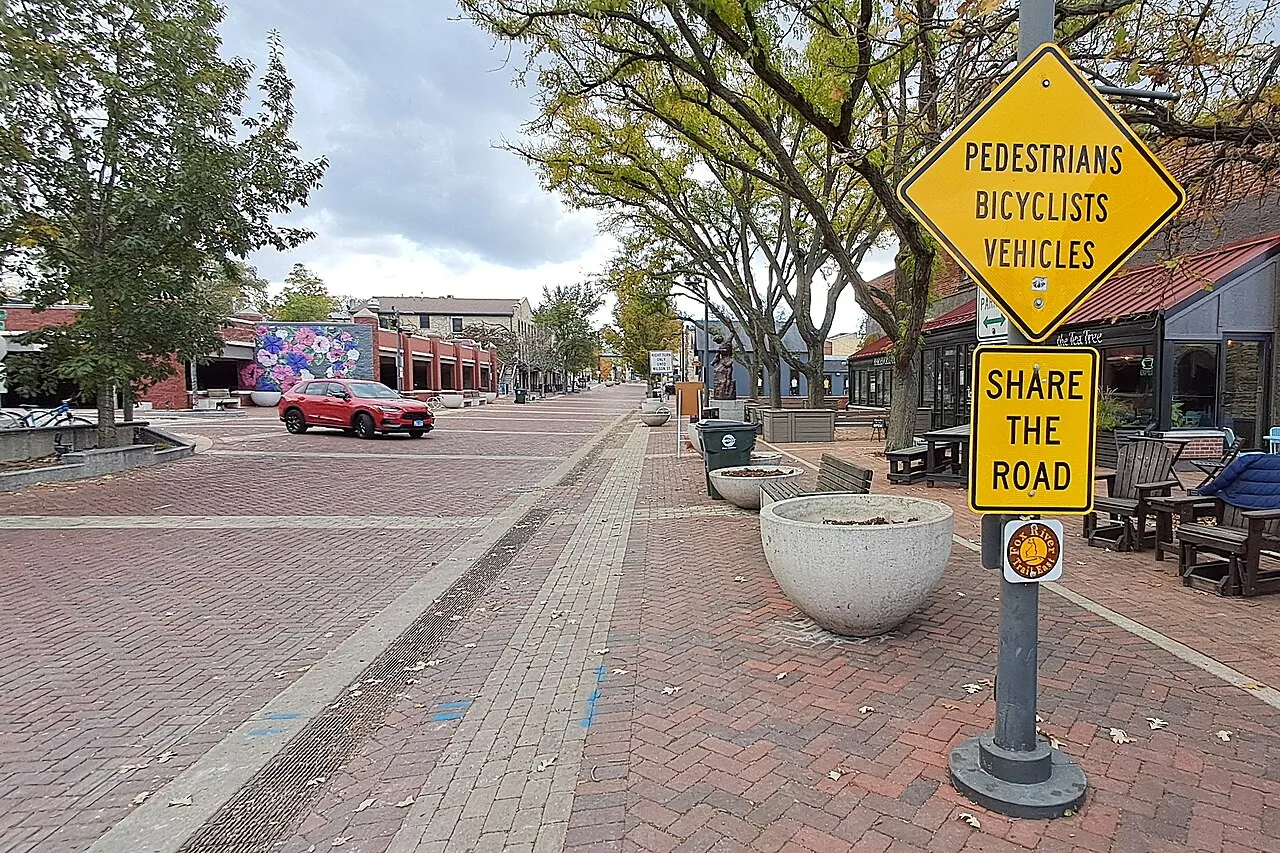
Downtown Batavia is small, built along both banks of the river around Wilson Street, with restaurants, a brewery, local shops and the limestone buildings from the windmill era. It is quieter than downtown Geneva or St. Charles, and it is changing faster than either right now. The city has leaned into it: in May 2026 it opened a new season of the Batavia Boardwalk Shops, a row of small seasonal storefronts for new local businesses, and it awarded a $150,000 grant to help bring an upscale restaurant to a vacant downtown corner, according to the same council recap.
A bigger change is coming in daytime foot traffic. QT9 Software is moving its headquarters from Aurora to downtown Batavia, a $12 million investment that the council supported with a $1.9 million incentive, and it expects 65 to 70 employees. Downtown parking is already tight on busy nights, and in September 2026 the council ordered a full downtown parking study rather than pave a proposed 198-space lot on Shumway Avenue.
For everyday shopping, Randall Road is the corridor. It runs north into Geneva and St. Charles and south into North Aurora, and it covers the big-box errands. The same September meeting approved a sales tax agreement to bring a Texas Roadhouse to the Randall Road corridor. For outlet shopping, Chicago Premium Outlets is a short drive south in Aurora.
Groceries and Everyday Errands in Batavia
Groceries are a Randall Road errand for most of the city. The national grocers, pharmacies and warehouse clubs along Randall in Batavia, Geneva and North Aurora are within a short drive of most west-side subdivisions. East-side residents often shop along Kirk Road or Butterfield Road instead. Aldi's U.S. headquarters is in Batavia, on the east side, which is a fun fact more than a shopping tip. If you live downtown, plan on a five to ten minute drive for a full grocery run.
Where Batavia Eats
Most of Batavia's independent restaurants are downtown within a few blocks of the river, with the chains along Randall Road. Local names that come up in city business news include Sturdy Shelter Brewing downtown and Everdine's Grilled Cheese Co., which the city recognized with a 2025 Ole Award for investing in the community. The downtown mix changes often enough that I would rather point you to the blocks around Wilson Street and River Street than to a list that will be out of date in a year.
If you want to try the town before you tour houses, go on a Friday or Saturday evening in summer, walk the river on both sides of Wilson Street, eat downtown and walk back across the bridge.
Parks, Quarry Beach and Recreation in Batavia
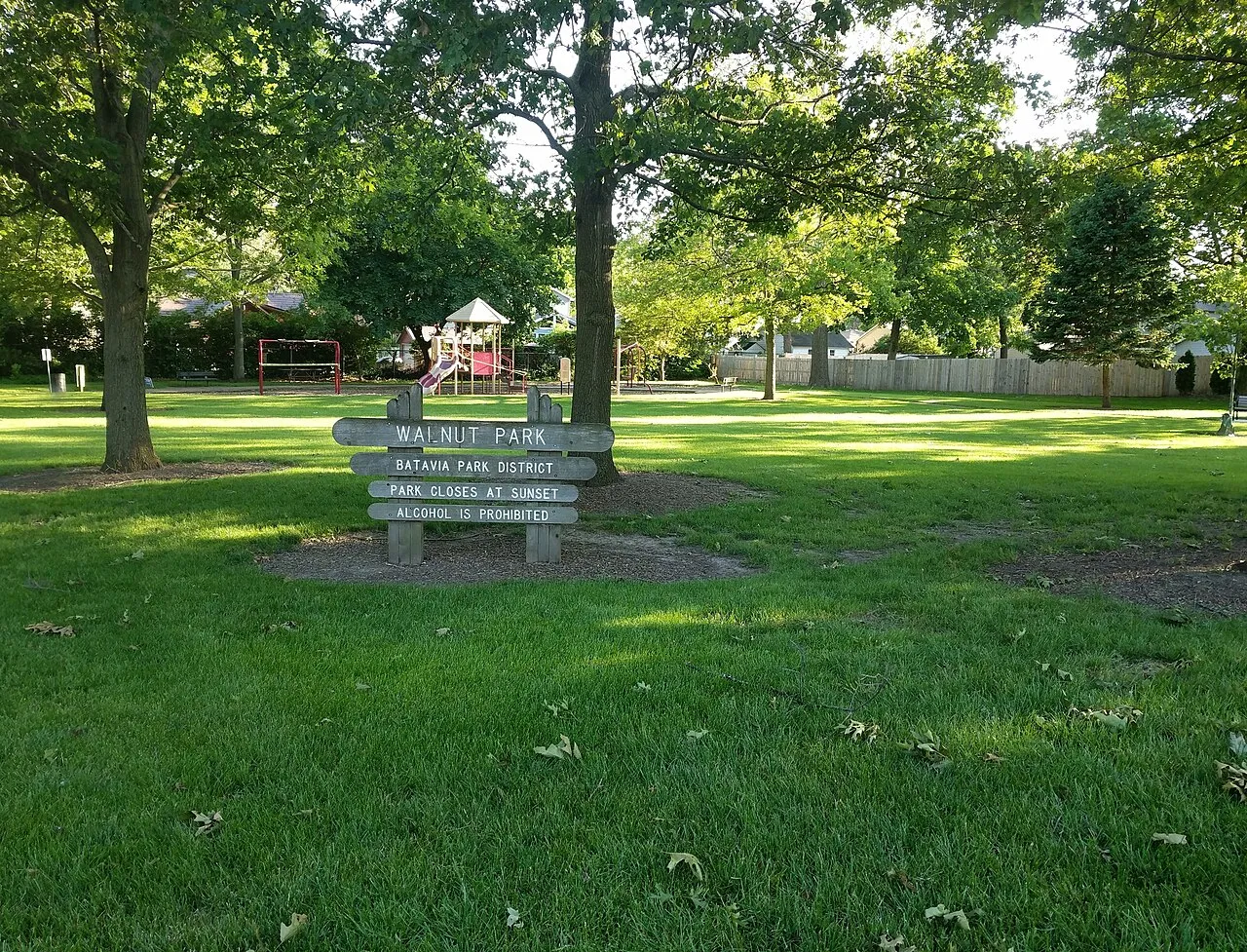
The Batavia Park District runs more than 40 parks and three community centers, along with trails, fishing spots, boat launches, ball fields, tennis and pickleball courts and a dog park, West Main Bark Park. The Peg Bond Center, the Civic Center, the Callahan Community Center and the Eastside Community Center host most indoor programs, and the Lodge at Laurelwood is a rentable event space.
The summer centerpiece is Harold Hall Quarry Beach, a swimming beach in a former limestone quarry. Quarries are a Batavia theme. The same stone that built the old factories left pits behind, and some became parks and ponds. Depot Pond, next to the Depot Museum, turns into an outdoor skating rink in winter when the ice allows. In July 2026 the park district accepted a $2.8 million park grant for park projects.
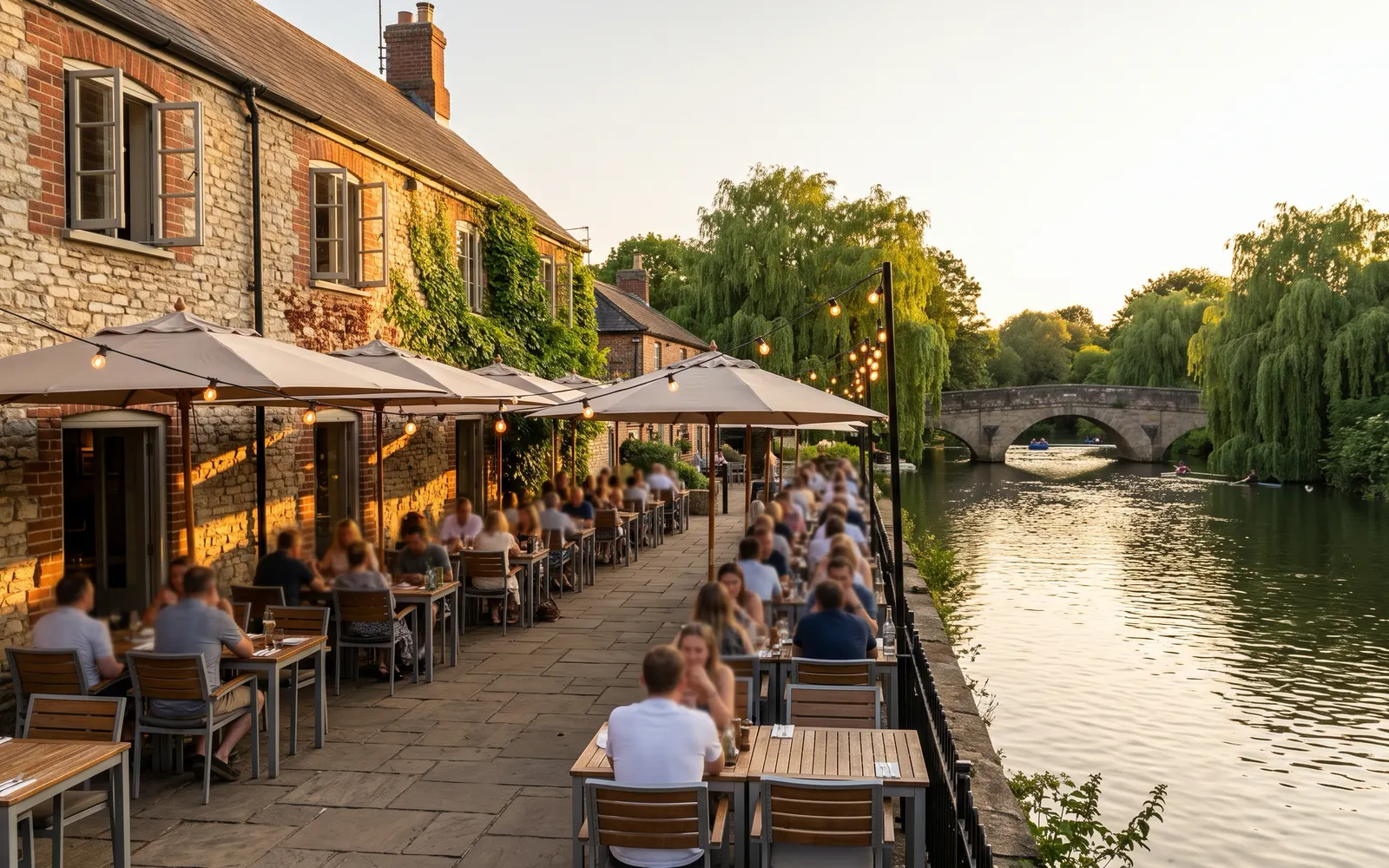
The Fox River is the other big draw. You can fish, paddle or walk the trail along the river through the middle of town, and forest preserve land to the south and west gives the edges of the city a lot of green space. Fermilab's grounds on the east side, with a bison herd that goes back to 1967, used to be a popular place to walk and bike. Public access has been restricted since 2023, so check Fermilab's visitor rules before you go.
The Batavia Public Library
The Batavia Public Library is downtown at 10 S. Batavia Avenue, in a building it moved into in January 2002. It is open seven days a week, until 9 p.m. Monday through Thursday, and it has a MakerZone with 3D printers, the Art on View gallery, a café and reservable study and meeting rooms. It also offers home delivery for patrons who can't get to the building.
The library is its own taxing district, and it files with both the Kane and DuPage county clerks because its district crosses the county line. In August 2026 the board held its hearing on up to $8 million in bonds for a renovation of the building, with construction bids to follow.
Utilities in Batavia, Including the City Electric Company
This is the one that surprises buyers from other suburbs. Inside the city limits, you don't buy electricity from ComEd. The City of Batavia runs its own electric utility, along with water and sewer, and bills all three together. Nicor Gas provides natural gas.
Where the power comes from is a long-running local debate. Batavia buys much of its electricity through the Northern Illinois Municipal Power Agency, a joint agency it formed in 2004 with Geneva and Rochelle. NIMPA owns a 120-megawatt share of the coal-fired Prairie State generating station in southern Illinois, and Batavia is tied to that contract for years to come. When power markets were cheap, that contract cost the city money. With demand now straining the national grid, it has been working in the city's favor. For a homeowner, the practical point is that your electric rate is set by the City Council, not the Illinois Commerce Commission, so rate changes show up on the council agenda first.
Unincorporated addresses are different. Homes outside the city limits may be served by ComEd and by a well and septic system or a private utility instead of city water and sewer. Ask for recent utility bills on any house you are serious about, and confirm the providers by address rather than by ZIP code.
Hospitals Near Batavia
Batavia does not have a hospital inside the city, but two are close. Northwestern Medicine Delnor Hospital is at 300 Randall Road in Geneva, a few minutes north for most of the west side. Rush Copley Medical Center in Aurora is the other nearby full-service hospital, a short drive south. Northwestern Medicine's larger Central DuPage Hospital in Winfield is the next step for specialty care.
Fermilab, Theater and Nights Out Near Batavia
Batavia's claim to scientific fame is on its east edge. Fermilab, founded in 1967, is where physicists discovered the bottom quark and the top quark, and it is in the middle of two big projects, the PIP-II accelerator upgrade and the beamline for the Deep Underground Neutrino Experiment, that run into the late 2020s and early 2030s. It had about 2,160 employees in 2023. Public access has been limited in recent years, so check its visitor page for lectures, tours and events before you plan a trip.
Closer to downtown, the Batavia Fine Arts Centre at the high school hosts school and community performances in its 890-seat theater, and the Depot Museum covers the town's windmill and railroad history. For a bigger night out, the riverfront downtowns of Geneva and St. Charles are a few minutes north, and the Kane County Cougars play at Northwestern Medicine Field in Geneva.
Windmill City Festival and Batavia's Yearly Traditions
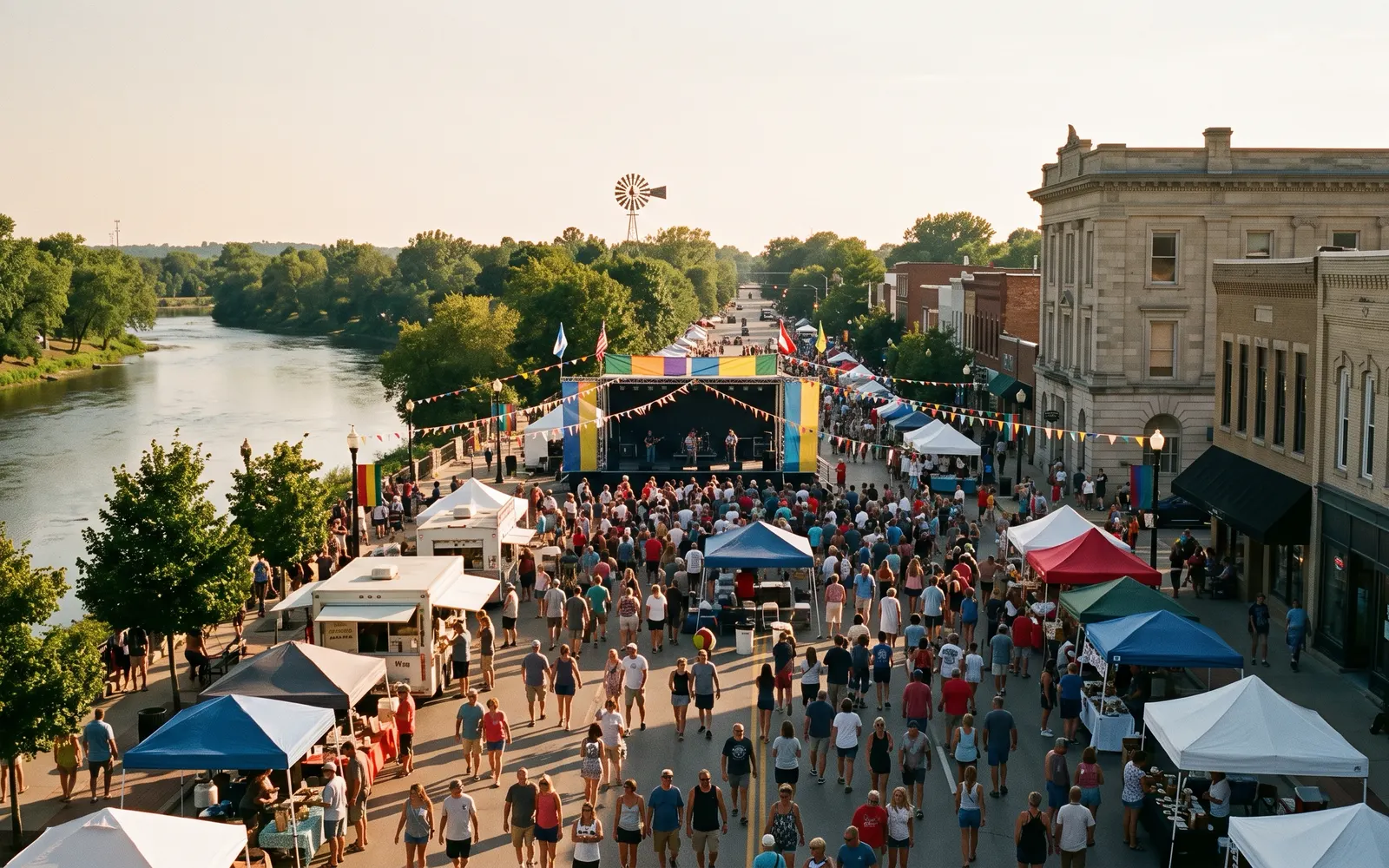
The big one is the Windmill City Festival, Batavia's summer festival. The 2026 edition set a record, with about $60,000 in beer garden sales reported to the park district board in July, according to a local recap of that meeting. Its name comes straight from the town's windmill-making past.
The rest of the year has a steady rhythm of smaller events, many run by the park district around the Depot Museum and Depot Pond. This fall, the park district has Day of Play at the Depot Museum and Pints by the Pond at the Peg Bond Center, both on Saturday, September 26, 2026. Later in the season come the Celebration of Lights and Breakfast with Santa. Check the park district and city calendars for current dates, because they shift year to year.
If you are touring houses in summer, go on a festival weekend. It tells you more about the town than any listing will.
What's Being Built in Batavia
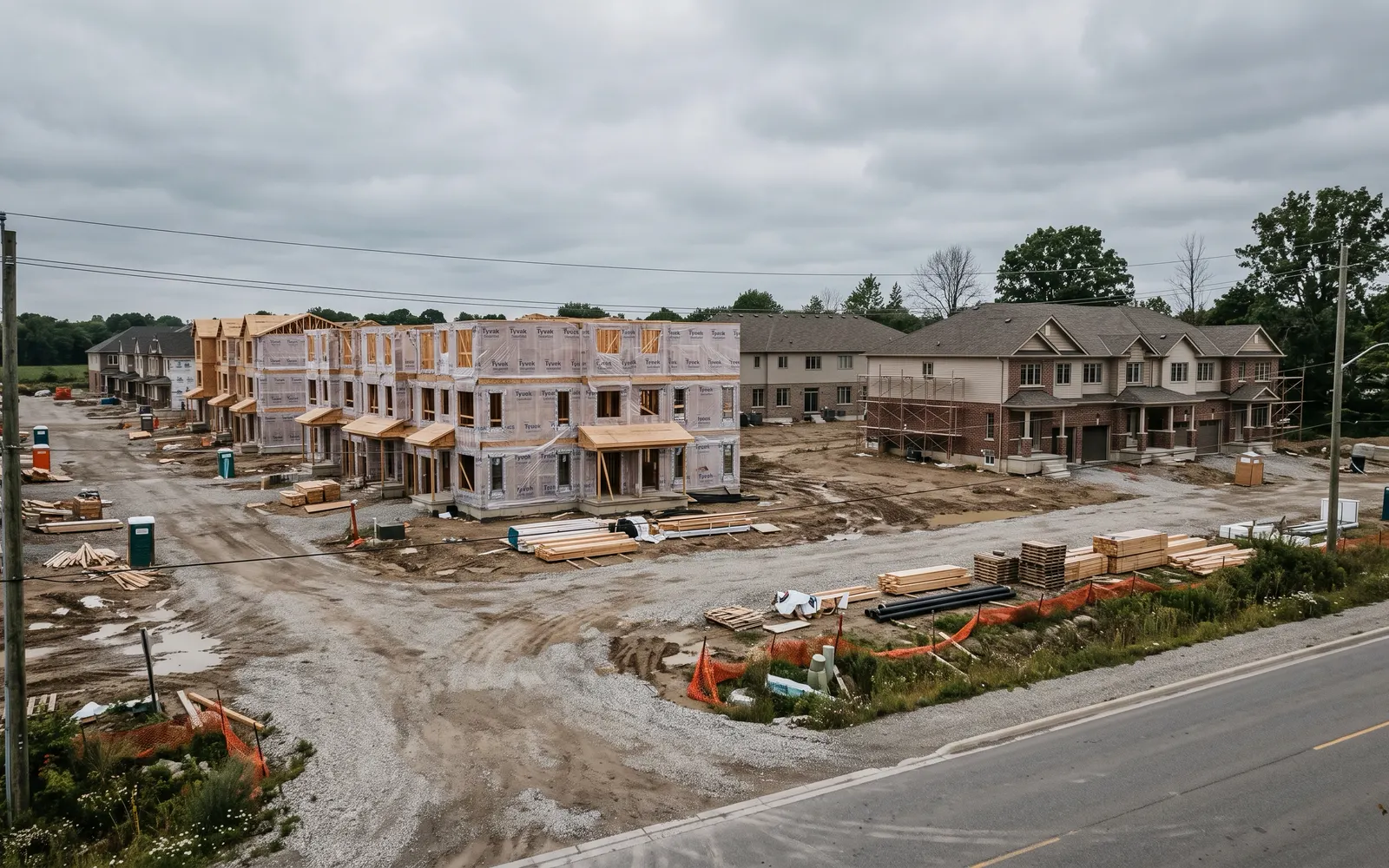
Batavia is nearly built out, so most of what is changing is redevelopment and a handful of remaining parcels. Here is what was in the pipeline as of September 2026.
The biggest residential project inside the city is Ashton Ridge, Pulte's redevelopment of 32 vacant acres at 1000 McKee Street, west of downtown. The City Council approved it 9 to 2 in August 2024 for 73 single-family homes of about 1,500 to 3,300 square feet and 86 townhomes in buildings of four to six units. Construction started in 2025 and homes are selling. On the northwest side, a 160-unit project called Thompson Farm at Fabyan Parkway and Wenmoth Road was approved in early 2026, according to a local analysis of the city's housing pipeline, which also counted about 1,300 potential units across all projects over the next decade.
Near downtown, the City Council approved $1 million in tax increment financing on June 1, 2026 for the Residences at River Pointe, a 72-unit affordable apartment building by Fox River Affordable Housing Corporation at 400 S. River Street, on a former stone quarry site. The project is budgeted at more than $28 million, and construction was expected to take about two years after a land closing targeted for July 2026.
On the southeast edge, just outside the city, Marmion sold farmland at Butterfield and Raddant roads to two builders. Those projects, Pulte's 59-home Harvest Pointe and Lennar's 220-townhome Abbey Meadows, were approved by the City of Aurora, so they are Aurora addresses with Aurora services even though they sit next to Batavia. Confirm the city and school district on any listing there.
The non-residential project with the most local attention is a data center. The city approved an agreement with Hut 8 Corp. for a 120,000-square-foot facility at 1780 Hubbard Avenue in the east-side industrial park, east of Kirk Road and away from homes. It is planned to start at 20 megawatts in late 2026 or early 2027 and scale to 50 megawatts by about 2031, buys its power on the open market rather than through the city's residential supply contract, and uses a closed-loop cooling system capped at about 1,000 gallons of water a day. The developer agreed to pay $18 million up front for electrical upgrades. The city expects it to bring in electric fees and tax revenue that help pay for infrastructure.
I don't label any town or neighborhood as safe or unsafe.
Flood Risk in Batavia
Flooding isn't a city-wide problem in Batavia, but it is a house-by-house one. Redfin, using First Street's model, rates Batavia's flood risk as minor, with about 4% of properties at risk of severe flooding over the next 30 years. That risk concentrates along the Fox River and the smaller creeks that feed it, which is also where some of the most desirable old-town lots are. The city is also relocating a storm sewer outfall on North River Street, a contract approved in September 2026.
Two checks before you write an offer. Look the address up on the FEMA flood map, because a mapped flood zone can mean required flood insurance on a mortgage. And ask the seller directly about water in the basement. In older Batavia houses near the river the answer is often "once," and the follow-up question about what they did about it is the one that matters.
Frequently Asked Questions
How much does a house cost in Batavia, IL?+
Redfin reported a median sale price of $494,673 for the three months ending August 2026, up 7.0%, and Zillow's home value index was $469,730 for August 2026. Prices run from townhomes well below the median to large west-side homes far above it.
What are property taxes in Batavia, IL?+
The median effective rate is about 2.63%, with a median bill of about $8,833 (Ownwell, April 2026). Rates vary by township and school district, and a home's bill usually rises after a sale once it is reassessed.
What school district is Batavia, IL in?+
Most of the city is in Batavia Public School District 101, which runs six elementary schools, Rotolo Middle School and Batavia High School. Parts of Batavia are in Geneva District 304 or West Aurora District 129, so confirm each address with the district.
Does Batavia, IL have a Metra station?+
No. Batavia commuters use the Geneva station on the Union Pacific West line or the Aurora and Route 59 stations on the BNSF line. The fastest trains take about 60 minutes from Geneva, 54 to 58 from Aurora and about 45 from Route 59.
Is Batavia in Kane County or DuPage County?+
Mostly Kane County. A piece of the city on the east side, around Fermilab, is in DuPage County's Winfield Township. Check the county and township on the tax bill for any specific house.
Who provides electricity in Batavia, IL?+
Inside the city limits, the City of Batavia's own municipal electric utility, which also provides water and sewer. Unincorporated addresses nearby may be on ComEd, so confirm by address.
What neighborhoods are in Batavia, IL?+
Commonly named areas include the Historic District and old town around downtown, the East Side, the Randall Road Corridor, Big Woods Marmion, and subdivisions such as Winding Creek, Prairie Commons and the new Ashton Ridge.
Is Batavia, IL walkable?+
Downtown is. Addresses near Wilson Street and the library score 84 to 85 on Walk Score, but the city-wide score is 29 and many subdivision addresses score under 10.
Eshu Chikoti has extensive access to off-market listings throughout Batavia and the rest of Kane County — homes that never make it to the public listing sites. That matters right now: in a seller's market like this one, well-priced homes routinely go under contract within days, and buyers relying only on public listings are competing for whatever is left over. Working with someone plugged into off-market inventory means seeing homes before the crowd does.
Eshu Chikoti · 847-691-4282 ·
Get new Batavia listings by email
When a home comes on the market in Batavia, I'll email it to you.
Just your email. Unsubscribe any time by replying.
Thinking About Batavia?
Whether you're buying, selling, or just curious what's on the market, I can walk you through Batavia street by street.