Barrington Hills, IL
Barrington Hills, IL is a village of about 4,100 people spread over 27.6 square miles in four counties, zoned for five-acre lots, with private wells, horse trails, thousands of acres of forest preserve and no downtown of its own.
Living in Barrington Hills, IL means five-acre zoning, private wells and septic, horse trails and forest preserve, and a typical home value near $1.09 million this August. Schools are mostly Barrington 220. The trade-off is that you drive for everything, including the 47-minute express train from Barrington. Here is how it breaks down.
Written by Eshu Chikoti · 847-691-4282 ·
How Barrington Hills, IL Got Here: A Short History
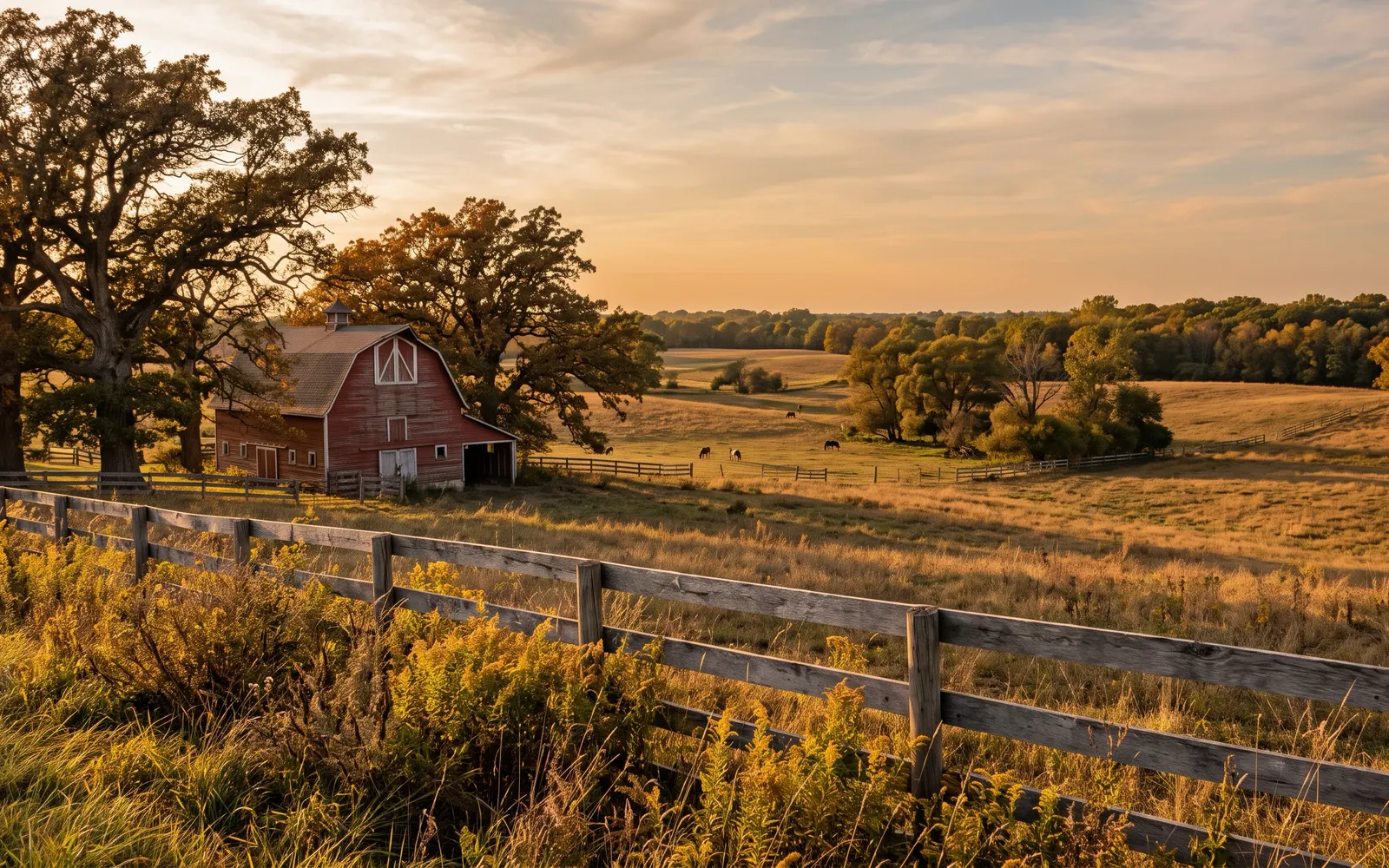
Barrington Hills was farm country long before it was a village. The oldest public landmark is Barrington Center Church, built in 1853, with a plaque outside listing 91 area residents who served in the Civil War. On the west side, near the Fox River, St. John Nepomucene Chapel was finished in 1873 at Church and River roads. According to Wikipedia, it is still the only privately owned Catholic chapel and cemetery in the Rockford Diocese.
The change that shaped everything after it came around 1900. Chicago executives, many tied to the railroads, bought up the rolling farms and turned them into country estates that ran as working farms. Spencer C. Otis Sr. had assembled about 1,000 acres along what was then Goose Lake Road by 1910. The road is Otis Road today, and his Hawthorne Farm was known for its round barns, three of them, built while the University of Illinois was experimenting with the design. In 1921 a group of those estate owners founded the Barrington Hills Country Club on 200 acres between County Line Road, Oak Knoll Road and Northwest Highway. The first clubhouse burned in 1930, and the 1931 clubhouse that replaced it still stands.
The village itself is young. It incorporated on July 5, 1957, with land only in the northwest corner of Cook County. Areas in McHenry and Lake counties joined in 1959, and in 1962 the village annexed the small Kane County village of Middlebury, whose one-room schoolhouse became the first police station. The five-acre minimum lot size for new construction dates to 1963, and it is the single rule that explains why the village looks the way it does sixty years later.
The current Village Hall at 112 Algonquin Road was built in 1974, expanded in 1993, and got a fire station on the grounds in 1994. When buyers ask me why Barrington Hills never grew a downtown, the honest answer is that it was designed not to. The people who incorporated it were protecting open land from the suburbs growing around them, and the zoning still does that job.
Barrington Hills at a Glance
Barrington Hills sits about 40 miles northwest of the Loop and covers 27.6 square miles, 27.0 of them land. It is one of only three municipalities in Illinois with land in four counties, along with Aurora and Centralia, according to Wikipedia. The neighbors are East Dundee, Carpentersville and Algonquin to the west, Fox River Grove and Lake Barrington to the north, Barrington and Inverness to the east, and South Barrington and Hoffman Estates to the south.
Cook County holds the largest share, which is why this page lists the village under Cook. The Census Bureau's 2024 population estimates split the village's 4,080 residents this way: 2,110 in Cook County (Barrington Township), 1,252 in McHenry County (Algonquin Township), 599 in Lake County (Cuba Township) and 119 in Kane County (Dundee Township). Cook is just over half, McHenry close to a third, Lake about one in seven, and Kane a small pocket on the west side.
That split is not trivia. Each county has its own assessor, its own tax calendar and its own health department that permits wells and septic systems. The village is served by five different fire protection districts, and two main school districts. Two houses on the same road can sit in different counties. The first thing I do with any Barrington Hills address is pull the parcel and confirm the county, because every number after that depends on it.
The 2020-2024 Census ACS counts 1,447 housing units, 98% of them detached single-family homes, and about 90% of occupied homes are owner-occupied. Rentals are rare. The 2020 Census count was 4,114 people, down from 4,209 in 2010, and the population has barely moved since. Most addresses carry a Barrington 60010 mailing address, and some use neighboring ZIP codes such as Fox River Grove's 60021 and Carpentersville's 60110.
You drive for every errand. You own your well, your septic and your trash contract. Your tax bill depends on which of four counties the parcel sits in, and it will likely climb after a purchase once the assessor catches up. Resale takes longer, because the pool of buyers for a specific large property is smaller. The zoning that protects the village also limits what you can split or build.
Barrington Hills Areas, County by County
Barrington Hills has no official neighborhoods, and it doesn't have subdivisions the way most suburbs do. Listings name the road, not a development. The most useful way to split the village is by county, because the county sets your tax bill, your assessor and often your fire district and school assignment. Within each county piece, the landscape does the rest: creek valleys and lakes in some places, open pasture and forest preserve in others.
The second split is lot size. The five-acre rule covers new construction, but land divided before 1963 was grandfathered, and in the 1990s residential lots of over one acre still covered only about 30% of the village while farmers worked roughly 3,000 acres, according to Wikipedia. The result is a village where a two-acre older lot and a 20-acre horse property can share a road. The village says the majority of parcels are five acres or larger, with homes that run from small cottages to large estates.
Below are the areas you will hear described. The boundaries follow county and township lines, which are exact, but the character notes are my read of public sources, so treat them as a starting point. If you want to know which county, fire district and school a specific address falls in, and what comparable land has sold for, that is a conversation I am happy to have here.
I have not closed a sale inside Barrington Hills yet. I have toured it with buyers, including a lakefront property on Old Sutton Road this summer, and the first question is always the same: how much of the land is usable, and how much is wetland, slope or easement. That answer moves price more than the house does.
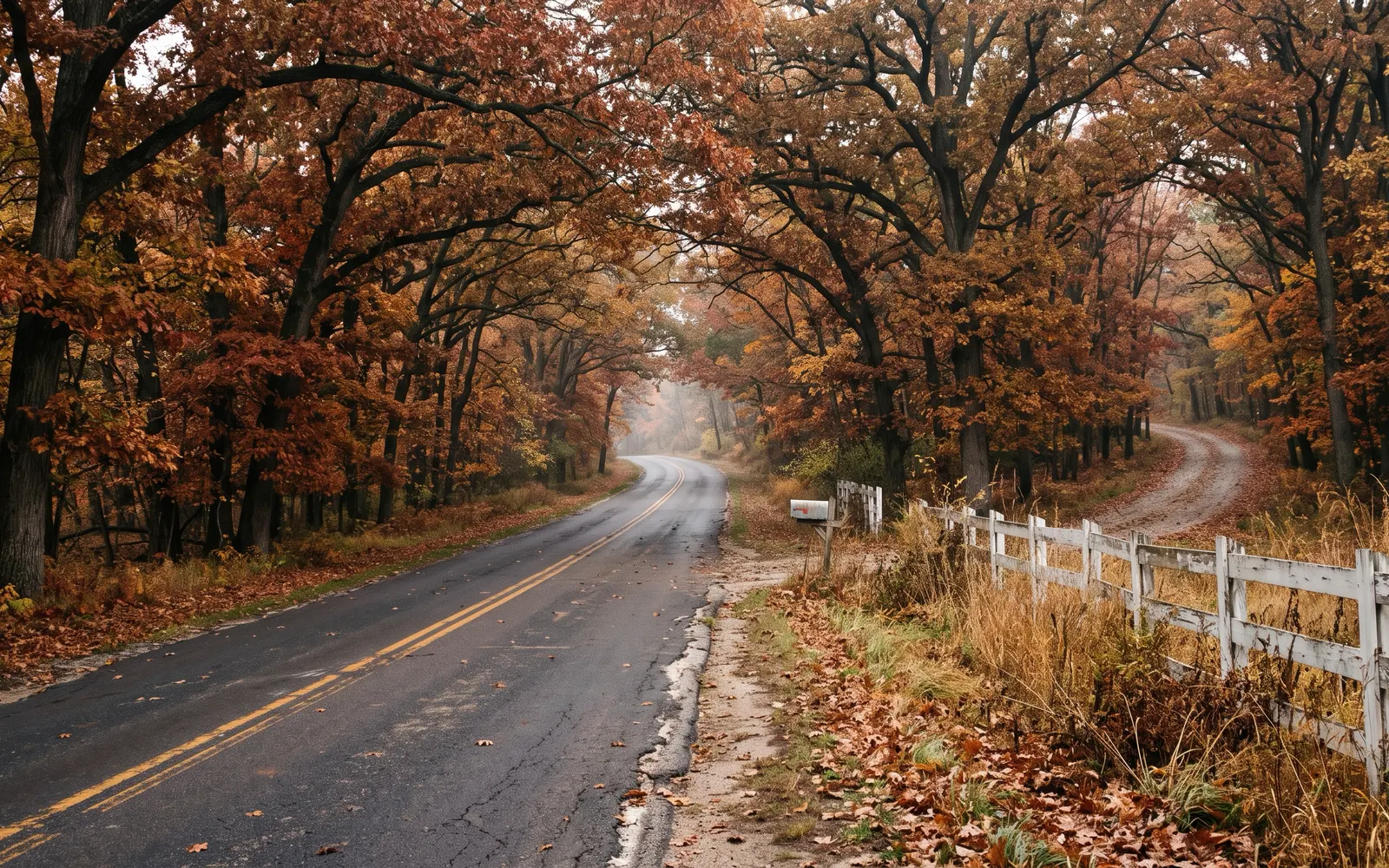
The Cook County side (Barrington Township). The original 1957 village and just over half the residents. Flint Creek runs through it and has been dammed into Hawley, Hawthorne and Keene lakes. It holds the Barrington Hills Country Club, Otis Road, Countryside Elementary on County Line Road, Crabtree Nature Center and most of the Spring Lake forest preserve along Bateman, Penny and Old Sutton roads.
The McHenry County side (Algonquin Township). Joined in 1959 and home to about 1,250 people. It runs toward Fox River Grove and Algonquin and includes the village's roughly 1,700 feet of Fox River shoreline. Some addresses here are in the Cary-Grove or District 300 school areas, so check.
The Lake County side (Cuba Township). Joined in 1959, about 600 people, on the north and northeast edge toward Lake Barrington and Barrington. Lake County's assessor and Board of Review handle these parcels.
The Kane County side (Dundee Township). The old village of Middlebury, annexed in 1962, now about 120 people on the west side near Carpentersville and East Dundee. Longmeadow Parkway passes through this part of the village.
What Barrington Hills Homes Look Like, by Era
Almost everything here is a detached house on a large lot. The 2020-2024 Census ACS counts 1,423 detached homes out of 1,447 units. What varies is the era, and the eras are spread out more evenly than in most suburbs.
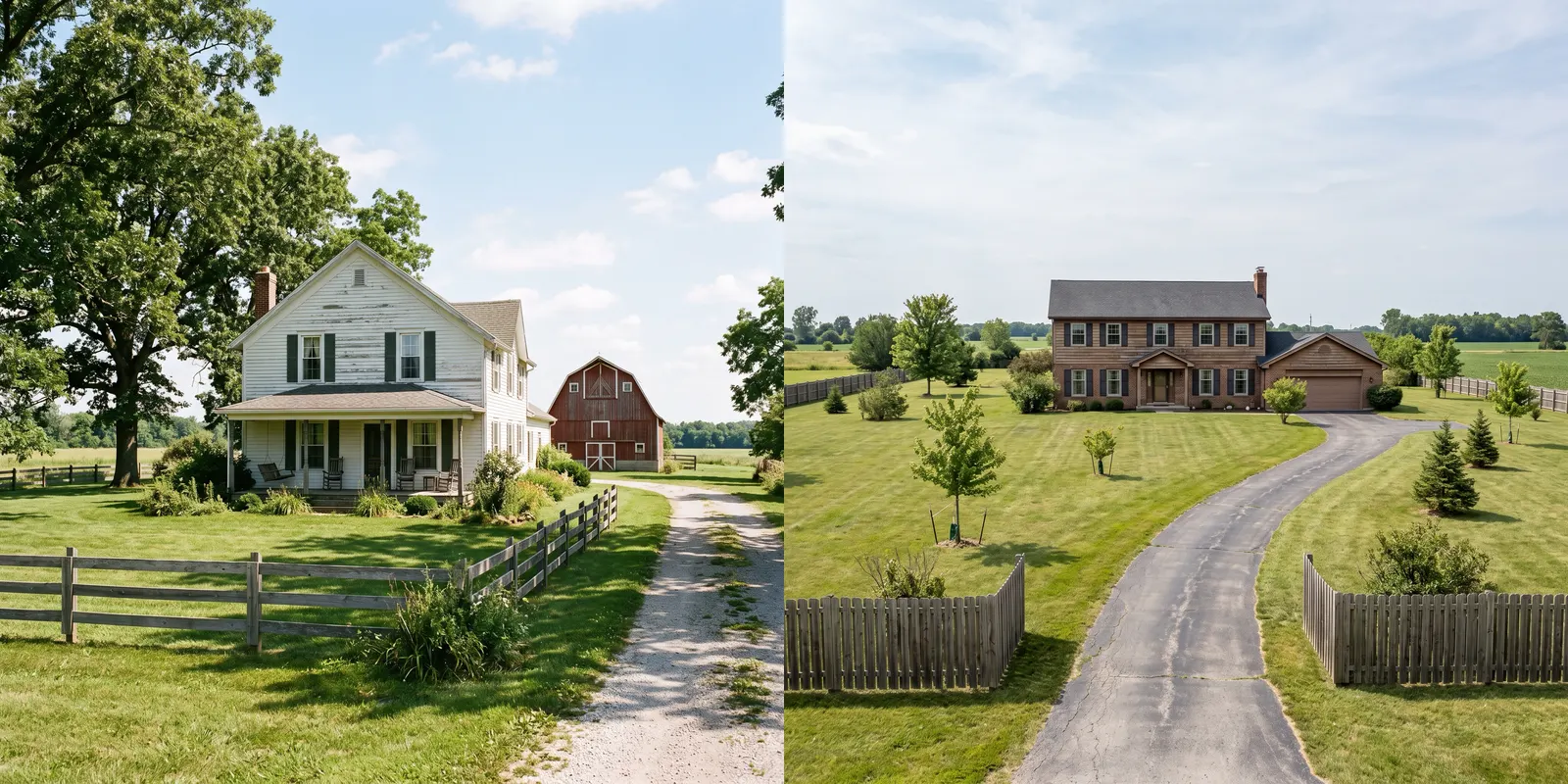
The ACS puts 158 homes before 1940. Those are the farmhouses and estate houses from the country-estate period, and some come with barns, outbuildings and staff cottages. The 1950s added 185 homes and the 1960s 126. The 1970s were the biggest decade, with 303 homes, followed by the 1980s (209) and the 1990s (223). Since 2000 the pace has slowed to a trickle: 119 homes in the 2000s, 44 in the 2010s and 64 since 2020. Those numbers carry wide margins of error in a village this small, but the shape is right. This is not a town with a new-construction pipeline. It adds a handful of custom homes a year.
In practice that gives you three kinds of house. The pre-war farmhouses and estate homes, often on the largest parcels. The 1960s to 1980s ranches, colonials and contemporary houses on five-acre lots, which are the bulk of the market. And the 1990s to today custom builds, larger and more often with finished lower levels, pools and horse facilities designed in from the start.
The ACS puts the median value of owner-occupied homes at $913,600. The median gross rent is listed at $3,282, but only about 130 households rent, so treat that as a rough marker rather than a market.
With houses this age, the inspection matters more than usual. On an older Barrington Hills property I expect to spend as much time on the well, the septic field, the outbuildings and the drainage as on the house itself. My home inspection checklist covers the house; the next section covers the land.
Barrington Hills Land: Zoning, Wells, Septic and Permits
Buying in Barrington Hills is closer to buying land than buying a house in a subdivision, and the due diligence is different. Four things decide what a property is really worth to you.
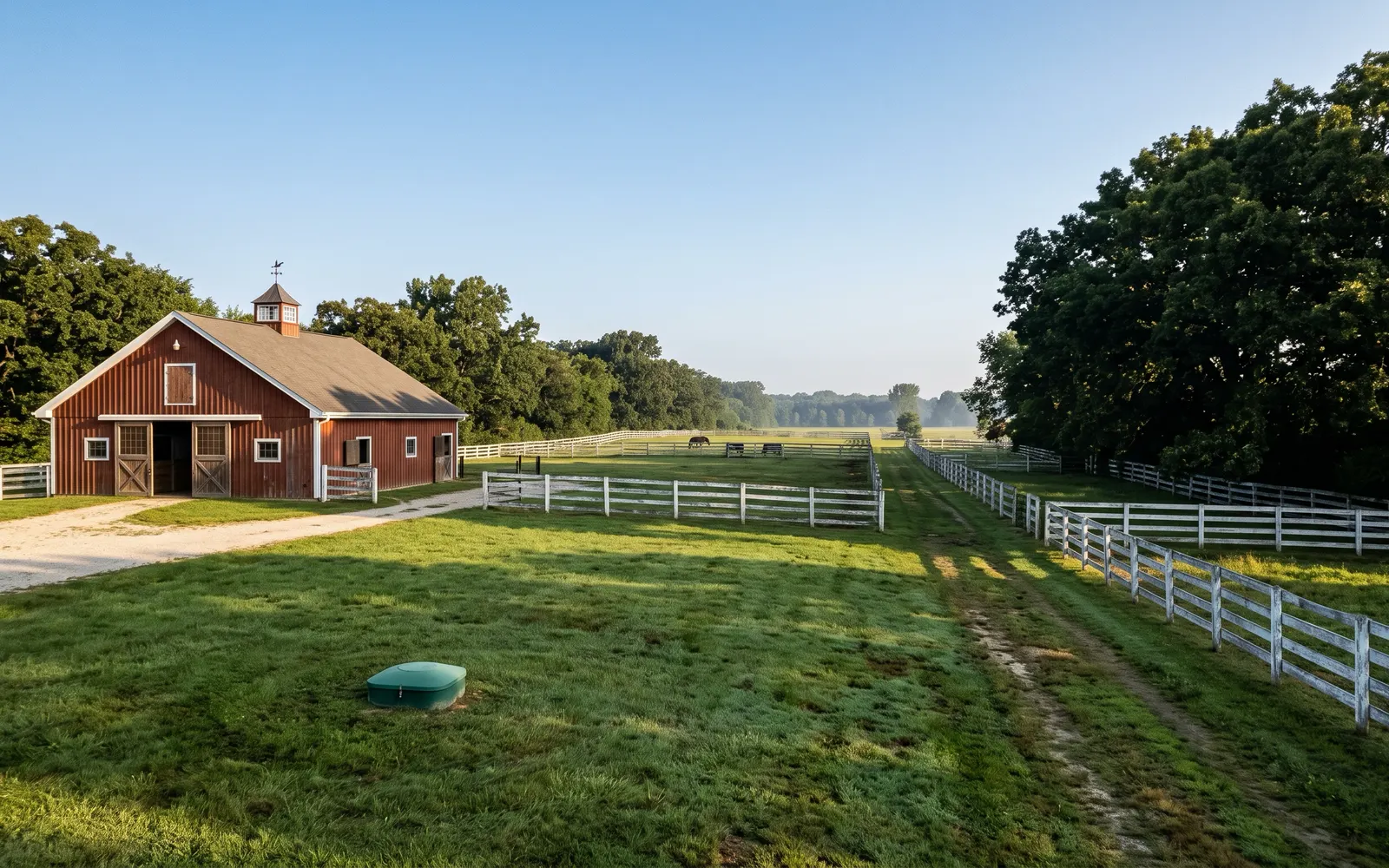
Zoning comes first. New construction has required a minimum of five acres since 1963. If a listing is marketed as divisible, or you are buying a larger parcel with a plan to split it, confirm with the village's Building Department before you count on it, because the minimum applies to each new lot. The village describes itself as a place where landowners decide how they use their land. Its property freedoms page says residents can keep chickens, ducks, goats, alpacas, bees and any other animal state law allows, and that Barrington Hills is the only local community where a resident can apply to build a shooting range or sporting clays course on their own property. Horses are allowed, and backyard barns and stables are a normal feature.
Water and sewer come second. The village does not provide either. According to its water, septic and waste page, most homes rely on a private well and septic system, wells should be tested every year, and septic tanks usually need pumping about every three years. The Barrington Area Council of Governments runs an annual well-testing event; for 2026, kit pickup started September 21 and the testing day is October 6 at the Barrington Area Library, according to the village. The county health department that permits the system depends on which county the parcel is in.
Trash is the third surprise for people coming from a town. There is no municipal pickup. Each owner contracts with a private hauler, and the village lists Groot, LRS and Waste Management among the companies that serve the area. Containers, schedules, yard waste and manure pickup vary by hauler.
Permits are the fourth. The Building Department requires a permit before any construction, raised its fee schedule for permits filed on or after May 1, 2025, and exempts only small items such as sheds under 200 square feet with no electricity or plumbing. Fences need no permit but must meet setbacks. Tree removal and watershed development have their own forms, and trucks over 36,000 pounds on village roads need an overweight permit, which matters if you are planning a big build or a barn.
On every Barrington Hills contract I would write in time for a well flow and water quality test, a septic inspection that includes locating and probing the field, and a survey that shows easements, wetlands and any riding-trail easement across the land. None of those should scare you off a good property. All of them belong in the price.
The Barrington Hills Housing Market in 2026
Barrington Hills values have risen steadily through 2026. Zillow's home value index put the typical Barrington Hills home at $1,090,687 in August 2026, up 9.9% from $992,741 a year earlier and about 20% above August 2023. The index estimates the value of all homes in the village, sold or not, and it tracks the middle of the market rather than the estates at the top.
The number that matters more here is how few homes trade. Redfin's public market tracker shows most months in the village with fewer than ten closed sales. At that volume a monthly median sale price jumps around with whatever happened to close. One 20-acre estate in a month can double the median, and a quiet month with a couple of older houses can halve it. I don't quote a Barrington Hills median to clients for exactly that reason. I pull the handful of comparable sales for the specific property instead.
What those comps usually show is that land drives value. Two houses of similar size can be far apart in price because one sits on usable, rolling pasture with trail access and the other on a parcel that is half wetland. Condition matters too, because many homes are 40 to 50 years old, and buyers here price in the cost of bringing an older house up to date.
Marketing time is also longer than in a typical suburb. Large, one-of-a-kind properties take longer to match with a buyer, and pricing a Barrington Hills home right on day one matters even more than it does in a subdivision, because there are fewer recent sales to prove the number. If you are comparing this market with the surrounding towns, my Lake County market report for Q3 2026 covers the Lake County side of the Barrington area.
Barrington Hills Property Taxes in Four Counties
Property tax is where the four-county split hits your monthly budget. Ownwell publishes a separate median for each county piece, all last updated April 13, 2026. On the Cook County side the median effective rate is 2.39% and the median bill $14,542. On the Lake County side it is 2.34% and $15,089. On the Kane County side it is 2.69% and $15,402, and on the McHenry County side 2.37% and $7,913. Those medians come from very different samples, and the McHenry one reflects a lower median home value in Ownwell's data, so compare the rates more than the bills.
Here is what that looks like on a real purchase. At the Cook-side 2.39% rate, a home bought at Zillow's $1,090,687 typical value would eventually carry about $26,000 a year in property tax, roughly $2,170 a month on top of the mortgage. Current bills may be lower because assessments trail the market, but the assessor catches up. The expectation I most often have to reset is buyers who budget off the seller's current bill.
Each county also runs its own calendar. Cook County reassesses the northwest suburbs on its own cycle and bills on a different schedule from the collar counties. Lake County's 2026 assessment notices for Cuba Township went out in August, with a 30-day window to appeal to the Lake County Board of Review, according to the village. If you own on the Lake side and think your assessment is high, my Lake County property tax appeal guide walks through the process. On the Cook side, Barrington Township held its own information session this August on filing 2026 appeals.
Within each county, every combination of township, school district, fire district, park district and library district is its own tax code with its own rate. With five fire districts and two main school districts in one village, two houses a mile apart can carry noticeably different bills at the same price. This is general information, not tax advice. Your actual bill depends on your parcel, your exemptions and the assessor.
Barrington Hills Schools: District 220 and District 300
Most of Barrington Hills is in Barrington Community Unit School District 220. The village describes it as a 72-square-mile district covering parts of four counties and 12 villages, with one early learning center, eight elementary schools, two middle schools and one high school. The only public school inside the village is Countryside Elementary at 205 W. County Line Road, which serves kindergarten through fifth grade. From there, students go to one of District 220's two middle school campuses, Prairie and Station, and then to Barrington High School.
Part of the village is in Community Unit School District 300, headquartered in Carpentersville. The village's District 300 page describes it as covering 118 square miles and 15 communities with about 21,000 students, and names Algonquin Lakes Elementary, Algonquin Middle School and Dundee-Crown High School for the Barrington Hills addresses it serves. Wikipedia also notes that some addresses fall in the Cary-Grove High School area.
The detail that trips people up is assignment. With four counties and more than one district, the school depends on the parcel, not the village name, and a listing's school field can be wrong. Check the address with District 220's boundary map or District 300 directly before you write an offer, and ask me if you want it done for a specific house.
Confirm the district for a specific address with the district office, and read each district's profile on the Illinois Report Card at illinoisreportcard.com.
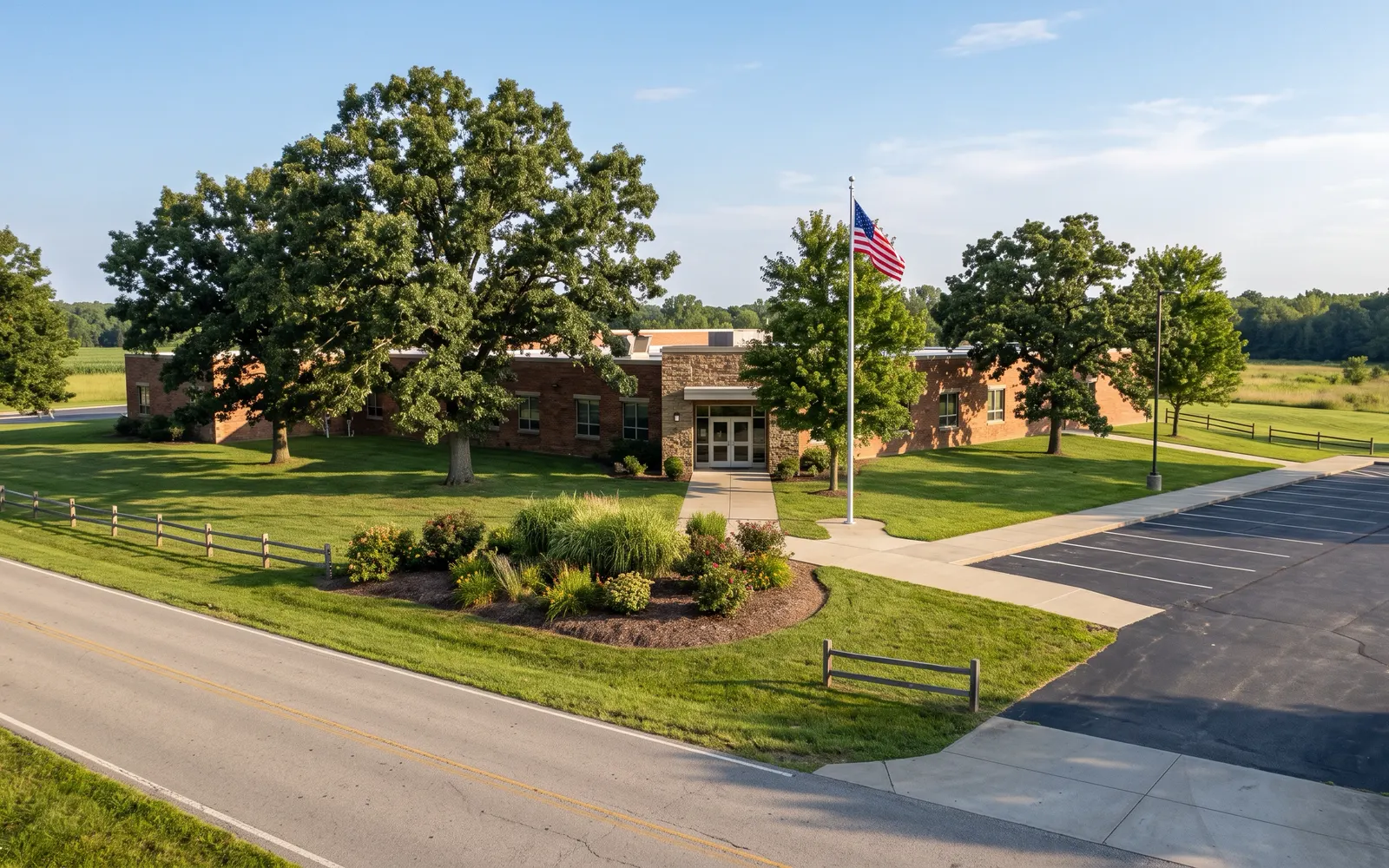
Countryside Elementary. 205 W. County Line Road. Grades K–5, District 220. The only public school in the village.
Barrington Middle School, Prairie and Station campuses. District 220.
Barrington High School. District 220.
Algonquin Lakes Elementary and Algonquin Middle School. District 300, for some addresses.
Dundee-Crown High School. District 300, for some addresses.
Commuting from Barrington Hills: Metra to Chicago
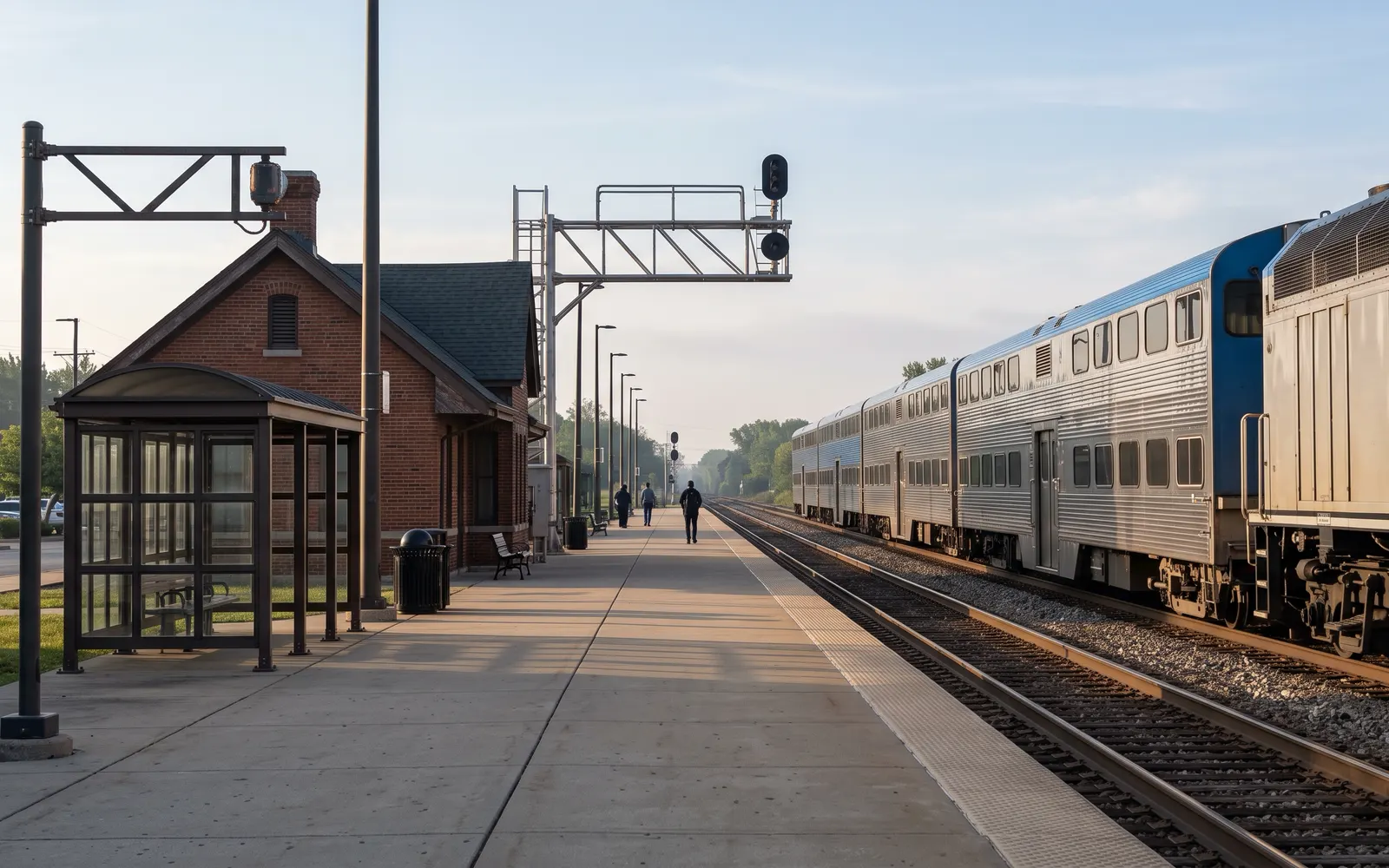
There is no train station in Barrington Hills, so every rail commute starts with a drive. Most people use the Barrington station on the Union Pacific Northwest line, in downtown Barrington just east of the village. Based on Metra's published schedule data for the weekday timetable effective September 28, 2026, 34 inbound and 31 outbound weekday trains stop at Barrington. On Saturdays there are 16 inbound and 17 outbound, and on Sundays 9 inbound and 11 outbound.
The express trains are the reason Barrington works. Four morning expresses reach Ogilvie Transportation Center in 47 minutes: the 6:15, 6:45, 7:15 and 7:45 a.m. trains, with the 6:15 arriving at 7:02. Other rush-hour trains take about 55 minutes, and locals about 67 to 68. If you commute downtown several days a week, build your mornings around the expresses.
The other two stations matter depending on where you live in the village. Fox River Grove, one stop west on the same line, has 27 inbound and 25 outbound weekday trains, with the fastest reaching Ogilvie in about 55 minutes, and it is closer to the McHenry County side. For the Kane County side, the Elgin station on the Milwaukee District West line has 22 trains each way on weekdays, with the fastest reaching Union Station in about 61 minutes.
From the far corners of the village the drive to a station is a real part of the commute, on two-lane roads with no shortcuts. Test it at your actual departure time, in winter if you can, before you commit to a train commute.
Driving from Barrington Hills: Routes 62, 68 and I-90
No interstate runs through Barrington Hills, and the road network is built around that. Algonquin Road (Route 62) crosses the village from southeast to northwest, and Village Hall sits on it. Dundee Road (Route 68) runs east-west through the middle, Northwest Highway (U.S. 14) clips the northeast corner toward Barrington and Fox River Grove, and Routes 31 and 25 run along the Fox River on the west. For I-90 and O'Hare, most drivers head south to the Jane Addams Tollway interchanges at Route 59 or Randall Road.
Inside the village, the roads are narrow, hilly and mostly without shoulders or sidewalks, which is part of the appeal and part of the adjustment. Horses cross some of them. The village maintains its own roads and runs rejuvenation work on select ones each summer; in 2026 that ran August 24 to 26.
One change to the west side is already done. Longmeadow Parkway opened on August 29, 2024: a 5.6-mile, four-lane corridor with its own Fox River bridge, built for $204 million, running through parts of Algonquin, Carpentersville and Barrington Hills from Huntley Road to Route 62 along Bolz Road. The bridge toll that was planned for years was dropped before opening, so the whole parkway is free. It takes through traffic off the old downtown bridges in Algonquin and Carpentersville, and it also sends more of that traffic to Route 62 at the village's west edge. According to the same source, the Illinois Department of Transportation has been studying whether to widen Route 62 to four lanes east to Route 59. If a house you like fronts Route 62, that study is worth asking about.
Is Barrington Hills Walkable?
For errands, no. There is no downtown center; Wikipedia notes only a small shopping strip along Route 14. Every grocery run, school drop-off and train ride is a drive.
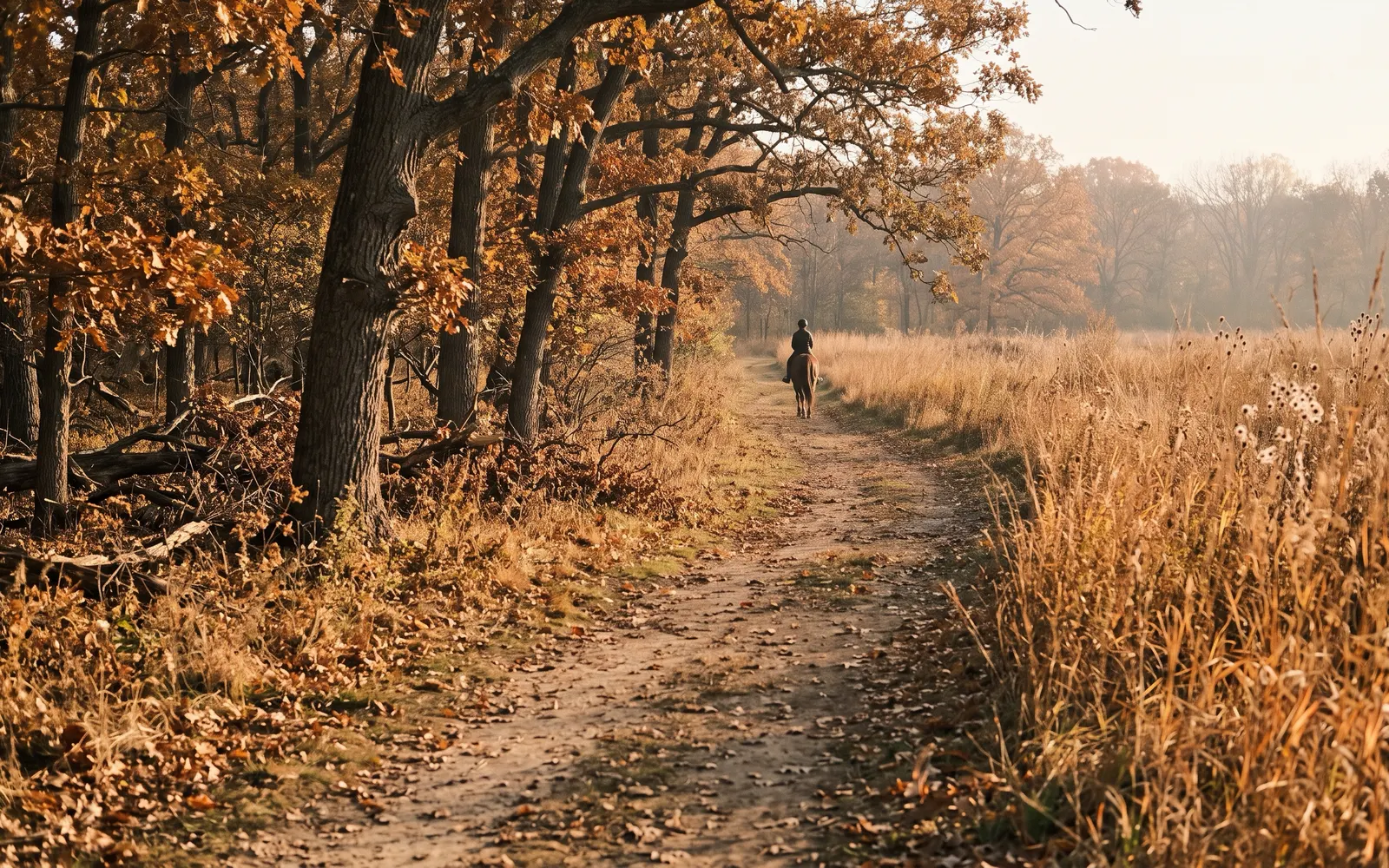
For recreation, it is one of the best places in the Chicago area to be on foot or on a horse. The village's equestrian page counts more than 150 miles of private and public trails, while its park district page puts the riding and walking network at about 116 miles; the difference is likely what each count includes. Either way, many properties connect to the network directly. The Forest Preserves of Cook County's Spring Lake preserve alone has 45.8 miles of unpaved trail open to hiking, biking, dogs on leash, cross-country skiing and horses.
The village also promotes its rural roads for running and cycling, and this summer's Land We Love Run, a 5K, 10K and two-mile walk, drew 138 registrants. The course is hilly, as one runner told the village afterward.
Shopping Near Barrington Hills
Barrington Hills has almost no retail by design, so shopping means choosing a direction. East is downtown Barrington, the nearest walkable business district, with its shops and restaurants around Main Street and Hough Street. West and northwest is the Randall Road corridor in Algonquin and Carpentersville, where the big-box stores and larger retail centers are, now closer for the west side of the village since Longmeadow Parkway opened. South, along I-90, are the Schaumburg and Hoffman Estates retail areas.
Which one you use depends on which side of the village you live on, and it changes daily life more than people expect. From the McHenry and Kane sides, Randall Road is usually closest. From the Cook and Lake sides, Barrington usually is. If two houses are close in your ranking, drive the weekly errand loop from each one.
Groceries and Everyday Errands from Barrington Hills
The closest full grocery store for much of the village is the Jewel-Osco at Main and Hough in downtown Barrington, at 150 W. Main Street, open from 6 a.m. to midnight according to its store page. West-side residents often shop along Randall Road instead. Pharmacies, banks and hardware stores are in the same places: downtown Barrington, the Route 14 corridor and Randall Road.
A few errands work differently here. Because there is no municipal trash service, your hauler is a contract you choose. The village hall at 112 Algonquin Road hosts a recycling drop for items such as packing foam, electronics and batteries through a contractor, with fees on some items. Long private drives are the other practical detail: ask the seller who plows theirs in winter and what it costs.
Where Barrington Hills Eats
There is effectively no restaurant row in Barrington Hills itself, so dining means Barrington, Algonquin, Fox River Grove or the Dundees. Downtown Barrington has the widest mix within a short drive, and downtown Algonquin's riverfront and the Randall Road corridor cover the west side.
One long-running landmark sits just off the village's west edge. The Milk Pail, east of East Dundee, is recognized as a historic site by the Dundee Township Historical Society, according to Wikipedia's Dundee Township article.
The other place to eat is at home and at your neighbors'. The village describes a steady calendar of benefit events hosted on private properties, from backyard gatherings to large galas, and the Fall Festival brings food and drink to the park district's Riding Center each October.
Forest Preserves, Horses and Recreation in Barrington Hills
Open land is the main amenity. The village says the Forest Preserves of Cook County hold more than 4,700 acres inside Barrington Hills, and Kane County's forest preserve district owns land here too.
The largest piece is Spring Lake, about 4,000 acres of hills and valleys also known as Spring Creek, with 45.8 miles of unpaved trail open to hikers, bikes, dogs on leash, skiers and horses. There is equestrian trailer parking on Bateman Road north of Algonquin Road and a fishing pond with parking on Penny Road west of Old Sutton Road. Part of it is a state-designated Illinois Nature Preserve, and Audubon lists it as an Important Bird Area. Crabtree Nature Center, at 3 Stover Road, covers more than 1,000 acres with 3.4 miles of self-guided trails, a lake with a waterfowl blind and an indoor nature center. It is open 9 a.m. to 5 p.m. from March through October (4 p.m. in winter) and closed Fridays.
The horse culture is organized, not just a backdrop. The Barrington Hills Park District's Riding Center sits on about 15 acres at 361 Bateman Road, next to Spring Lake. According to the village's equestrian page, the Riding Club of Barrington Hills maintains riding traditions and trails, the Barrington Hills Polo Club offers both grass and arena polo, the Fox River Valley Pony Club trains at the Riding Center, and the Massbach and Fox River Valley Hounds still ride at the former Horizon Farms, now forest preserve land, continuing a hunt tradition that started here in 1940.
For golf, the private Barrington Hills Country Club has been here since 1921. For wildlife, the village became one of the first Bee City USA affiliates in Illinois in 2019, and bald eagles winter along the Fox River valley.
Libraries Serving Barrington Hills
Much of Barrington Hills is served by the Barrington Area Library at 505 N. Northwest Highway in Barrington. According to its website, it is open 9 a.m. to 9 p.m. on weekdays, 9 a.m. to 5 p.m. on Saturday and 1 to 5 p.m. on Sunday, with parking-lot pickup. It is also where the area's annual well-testing day is held, on October 6 this year. Library district lines don't always follow village lines in a four-county town, so check which district your parcel pays into; a few west-side addresses may belong to a neighboring district instead.
Utilities and Services in Barrington Hills
The village's utilities page lists ComEd for electricity and Nicor Gas for natural gas. Water comes from your own well, sewage goes to your own septic system, and trash is a private contract, as covered above. Internet is the one to check property by property: the village does not list a provider, and service on long rural driveways varies, so ask the seller what they use and confirm availability at the address before you close.
Fire and emergency medical service comes from one of five fire protection districts, according to the village: Barrington Countryside, Carpentersville and Countryside, Fox River Grove, East Dundee, and Algonquin-Lake in the Hills. Your district is listed on your tax bill and shown on the grid sign at your driveway. Police service comes from the Barrington Hills Police Department, and 911 calls are answered by the QuadCom center, which the village joined in 2015.
Hospitals Near Barrington Hills
There is no hospital in the village. For most of Barrington Hills the closest full-service hospital is Advocate Good Shepherd Hospital in the Barrington area. On the west and south sides, Advocate Sherman Hospital on Randall Road in Elgin is often closer. Response times for ambulance calls depend on your fire protection district, so it is worth knowing which station serves your address.
Horse Shows, Polo and Benefit Events in Barrington Hills
Entertainment in Barrington Hills mostly happens outdoors and on private land. The village lists annual signature events that include concerts for open lands benefiting the Barrington Area Conservation Trust, galas benefiting JourneyCare's hospice and palliative care, the LeCompte/Kalaway Trail Owners Cup that supports the local equestrian and polo tradition, and the Barrington Country Garden and Antique Faire. Many are hosted on residents' properties and open to ticket buyers.
Polo is the one that surprises people from outside the area. The Barrington Hills Polo Club plays on grass in season and in an arena the rest of the year. For everything else, downtown Barrington and the western suburbs are a short drive, and the Loop is under an hour by express train.
The Barrington Hills Fall Festival and Yearly Traditions
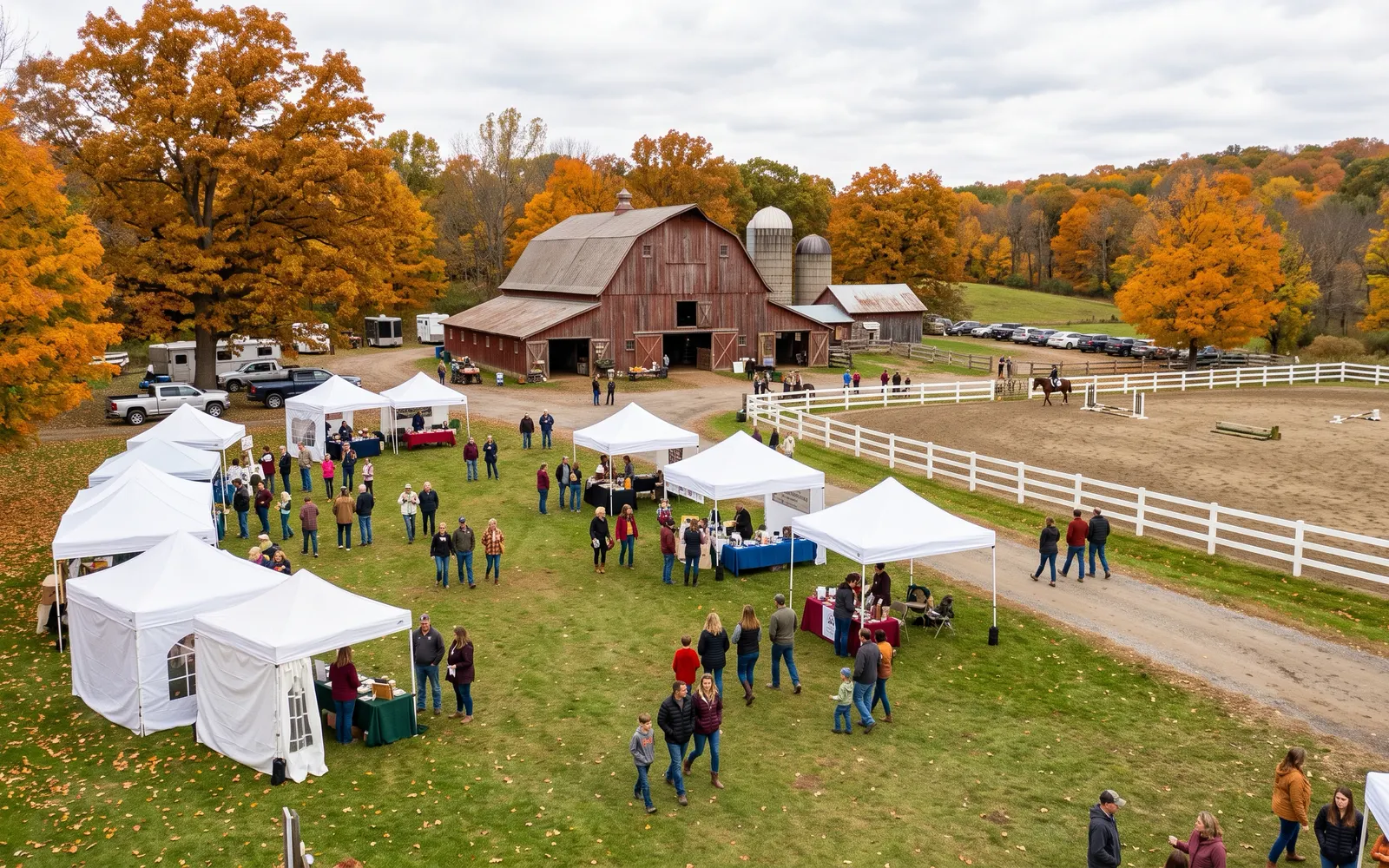
The village's main public event is the Barrington Hills Fall Festival. In 2026 it runs Sunday, October 11, from noon to 4 p.m., rain or shine, at the park district's Riding Center, 361 Bateman Road, with live music, food and drinks, according to the village.
In summer, the village and Cuba Township host the Land We Love Run. In 2026 it ran as Land We Love Run America250, and the village reports that 138 registrants raised a record $22,006.99 for Folds of Honor-Chicago and collected more than 100 pounds of food for the Cuba Township Food Pantry. Fall well-testing, the forest preserve programs at Crabtree and the horse and polo season fill out the rest of the year.
If you are touring properties in early October, go to the Fall Festival. You will learn more about how the village actually works in an afternoon at the Riding Center than from any listing.
What's Changing in and Around Barrington Hills
Very little gets built inside Barrington Hills, and that is by design. The Census ACS counts about 108 homes built since 2010, a few a year, almost all custom houses on existing or newly split five-acre lots. There is no subdivision pipeline to track the way there is in the towns around it.
The changes to watch are mostly at the edges. The biggest recent one is Longmeadow Parkway, open since August 2024, which carries Fox River traffic to Route 62 on the west side. IDOT's study of widening Route 62 east to Route 59 is the follow-on to watch.
The second is land use just outside the village. On September 8, 2026, the village posted notice of a Cook County petition to run a commercial truck-parking business for 50 dump trucks at 15N803 Old Sutton Road, just south of the village line in unincorporated Cook County, with a companion variance to raise an accessory building from 15 feet to 20 feet 2 inches. Village President Brian Cecola filed a comment asking Cook County's Zoning Board of Appeals to recommend denial, and the hearing is set for September 23, 2026. Because the county, not the village, controls those unincorporated edges, this kind of case comes up from time to time, and it is worth checking what surrounds any property you are considering.
The third is conservation. Land preservation and conservation easements are spread across the village, according to the village, and a parcel under an easement may carry limits on building or dividing it. Read the title commitment closely.
I don't label any town or neighborhood as safe or unsafe.
Flood and Drainage Risk in Barrington Hills
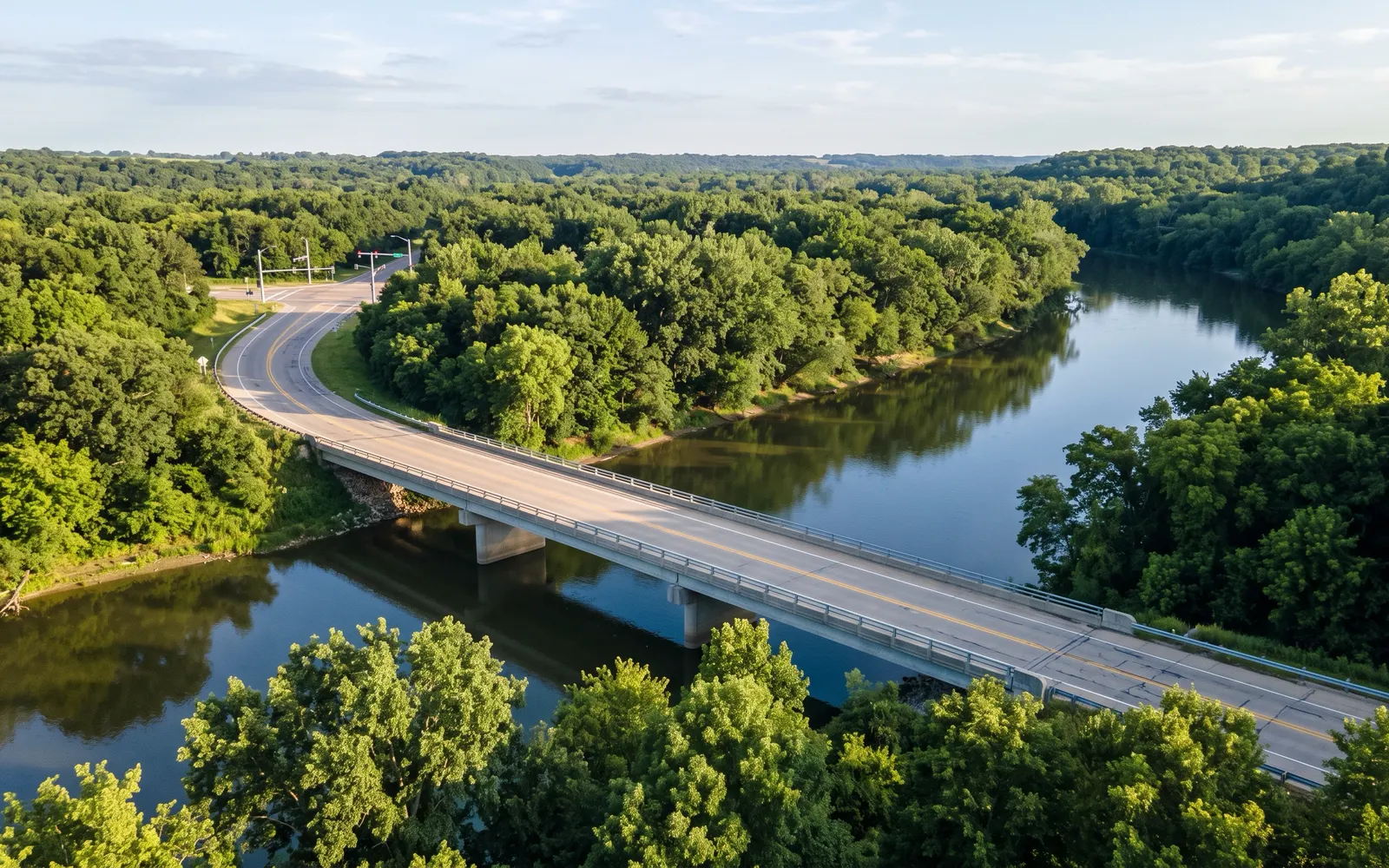
Flooding in Barrington Hills is a parcel question, not a village one. The land drains to the Fox River through two creeks: Spring Creek to the west and Flint Creek to the east, which has been dammed into Hawley, Hawthorne and Keene lakes on the Cook County side, according to Wikipedia. Homes on those lakes, along the creeks, near the Fox River shoreline and next to the forest preserve wetlands are where risk concentrates. The hilltop houses a few hundred yards away can have none.
Three checks before you write an offer. Look the parcel up on the FEMA flood map, because a mapped flood zone can mean required flood insurance on a mortgage. Ask for any wetland delineation or watershed permit history, because the village requires a watershed development permit for work that affects drainage. And ask the seller directly about water in the basement and about the septic field after heavy rain. On a well-and-septic property, drainage problems show up in more places than the basement.
Frequently Asked Questions
What county is Barrington Hills, IL in?+
Four: Cook, McHenry, Lake and Kane. Census estimates for 2024 put 2,110 of its 4,080 residents in Cook County, 1,252 in McHenry, 599 in Lake and 119 in Kane. Each county has its own assessor and tax calendar, so confirm the county for any parcel.
How much does a house cost in Barrington Hills, IL?+
Zillow's home value index put the typical home at $1,090,687 in August 2026, up 9.9% from a year earlier. The Census ACS median value is $913,600. Few homes sell each month, so price any specific property off comparable sales.
What are property taxes in Barrington Hills, IL?+
Ownwell's April 2026 medians show effective rates of 2.39% in the Cook County part, 2.34% in Lake, 2.69% in Kane and 2.37% in McHenry, with median bills from about $7,900 to $15,400. A bill usually rises after a sale once the home is reassessed.
What is the minimum lot size in Barrington Hills?+
New construction has required at least five acres since 1963. Older lots divided before then can be smaller, and the village says most parcels are five acres or larger.
Does Barrington Hills have city water and sewer?+
No. The village provides neither. Most homes use a private well and septic system, and owners contract privately for trash pickup.
What school district is Barrington Hills, IL in?+
Mostly Barrington Community Unit School District 220, with Countryside Elementary inside the village and Barrington High School. Part of the village is in District 300 (Dundee-Crown High School), and some addresses feed Cary-Grove. Confirm each address with the district.
How long is the commute from Barrington Hills to downtown Chicago?+
There is no station in the village. From the Barrington Metra station on the UP Northwest line, four morning expresses reach Ogilvie in 47 minutes and locals take about 67 minutes, with 34 inbound weekday trains on the fall 2026 timetable.
Can you keep horses in Barrington Hills?+
Yes. The village allows horses and other animals permitted by state law, many properties have barns and stables, and residents share a network of riding trails the village puts at 116 to 150 miles, plus the park district's Riding Center on Bateman Road.
Eshu Chikoti has extensive access to off-market listings throughout Barrington Hills and the rest of Cook County — homes that never make it to the public listing sites. That matters right now: in a seller's market like this one, well-priced homes routinely go under contract within days, and buyers relying only on public listings are competing for whatever is left over. Working with someone plugged into off-market inventory means seeing homes before the crowd does.
Eshu Chikoti · 847-691-4282 ·
Get new Barrington Hills listings by email
When a home comes on the market in Barrington Hills, I'll email it to you.
Just your email. Unsubscribe any time by replying.
Thinking About Barrington Hills?
Whether you're buying, selling, or just curious what's on the market, I can walk you through Barrington Hills street by street.